

September 08, 2026
Cessna Pilot Center: A Practical Australian Guide
Searching for a cessna pilot center can be confusing when you are based in Australia. The phrase sounds like an official licence category or a specific type of Australian flying school. However, it generally refers to a Cessna-branded flight training model rather than an Australian regulatory approval. For Australian students, the more important questions concern CASA authorisation, instructor quality, aircraft availability, course structure and the licence you intend to earn.
The Cessna name remains closely associated with flight training, particularly through aircraft such as the Cessna 172 Skyhawk. Therefore, many aspiring pilots use the term when they are looking for a school that offers structured instruction in Cessna aircraft.
However, choosing a school by aircraft brand alone can be limiting. A good training provider must also offer consistent instruction, reliable scheduling, transparent pricing and a clear pathway through Australian licensing requirements.
definition
A Cessna Pilot Center is a flight school operating within Cessna’s branded training network, typically using structured ground and flight lessons with Cessna aircraft. In Australia, however, the label is not a CASA licence category. Students must still train through an appropriately authorised Australian operator and meet CASA requirements.

Table of Contents
- What does a Cessna Pilot Center mean?
- Is it an Australian flight school approval?
- Why Australians search for Cessna training
- Cessna Pilot Center versus CASA-authorised training
- Why the Cessna 172 is widely used
- Australian pilot licence pathways
- How to choose a Cessna-based flight school
- What structured training should include
- Understanding flight training costs
- Australian versus overseas training
- Common mistakes to avoid
- People Also Ask
- Expert Q&A
- Conclusion
What Does a Cessna Pilot Center Mean?
A Cessna Pilot Center is generally understood as a flight school connected with Cessna’s branded training system. Traditionally, these centres have combined Cessna aircraft, instructor-led flying lessons, ground study material and a standardised curriculum.
The concept became especially prominent in the United States. Cessna-branded courses have been developed for students completing structured flight training, including courses associated with the American Federal Aviation Administration system.
The main purpose of the model is consistency. Instead of treating ground theory and aircraft lessons as separate activities, the curriculum attempts to connect them. For example, a student may learn about stalls during ground study and then practise stall recognition and recovery during a related flying lesson.
This approach can help students understand why a manoeuvre is performed, not simply how to move the controls.
However, the expression does not mean that every lesson must take place in a Cessna. It also does not mean that all Cessna-equipped flying schools belong to the branded network.
Three different situations are therefore possible:
- A school may be formally identified as a Cessna Pilot Center.
- A school may use Cessna aircraft without being part of that network.
- A school may provide excellent training using another aircraft manufacturer.
For an Australian student, the second and third situations can be just as suitable as the first.
Why the American spelling matters
Australian English normally uses “centre”. However, Cessna Pilot Center is a branded phrase that uses the American spelling “center”. Therefore, the American spelling should be retained when discussing the programme or responding to the exact search term.
When referring to a general Australian flight training centre, the Australian spelling remains appropriate.
Is a Cessna Pilot Center an Australian Approval?
No. The term is not an Australian pilot licence, rating, endorsement or regulatory approval.
In Australia, flight crew licences are issued under the Civil Aviation Safety Authority framework. Flight training operators are generally authorised under Part 141 or Part 142 of the Civil Aviation Safety Regulations, depending on the training they provide.
Part 141 operators usually conduct non-integrated training. Part 142 operators can provide integrated courses and certain advanced training activities. Some organisations hold both types of approval.
Therefore, a branded training label does not replace CASA authorisation. Likewise, operating a fleet of Cessna aircraft does not, by itself, prove that a school is approved to conduct every course it advertises.
Before enrolling, students should confirm:
- Which CASA approval the operator holds
- Which licences, ratings or endorsements it may deliver
- Whether the advertised course is integrated or non-integrated
- Which aircraft will be used
- Who will conduct the training
- How flight tests and licence applications are arranged
These checks are administrative due diligence rather than legal advice. Current requirements should always be confirmed with the training provider and CASA.
Why Australians Search for Cessna Pilot Center Training
Australians who search for this term are not always looking for the same thing. Some want a particular branded centre, while others simply want to learn in a Cessna.
Common search intentions include:
- Finding Cessna 172 flying lessons
- Comparing pilot schools
- Locating a structured private pilot course
- Understanding whether overseas Cessna training is recognised
- Finding an Australian equivalent to an American Cessna programme
- Learning whether Cessna aircraft are suitable for beginners
- Comparing Cessna-based training with other aircraft
Understanding your own intention helps narrow the search.
For instance, a student seeking weekend recreational lessons may value flexible scheduling and aircraft availability. In contrast, a career student may need a full pathway from initial training to a Commercial Pilot Licence, instrument rating and instructor qualification.
The aircraft brand matters, but the intended outcome matters more.
Cessna Pilot Center Versus Australian Flight Training
The following comparison explains how the terms differ.
| Feature | Cessna Pilot Center | CASA-authorised Australian school | Cessna-equipped Australian school |
| Main meaning | A Cessna-branded training arrangement | An operator authorised under Australian aviation regulations | A school that operates one or more Cessna aircraft |
| Regulatory authority | Usually linked to the country where the centre operates | Civil Aviation Safety Authority | Civil Aviation Safety Authority if conducting regulated Australian training |
| Required for an Australian licence | No | Yes | Only if the operator has the correct CASA authorisation |
| Aircraft | Commonly Cessna models | May use Cessna, Diamond, Piper, Sling or other aircraft | Primarily or partly Cessna |
| Curriculum | Often uses branded or standardised material | Must meet relevant Australian competency and training requirements | Depends on the operator and course |
| Licence outcome | Depends on the country and course | Australian RPL, PPL, CPL, ratings or endorsements | Depends on CASA approval and the training delivered |
| Best question to ask | Is the course relevant to my intended licence? | Is the operator approved for my course? | How does this aircraft fit my training pathway? |
The practical lesson is straightforward. Australian students should not assume that the Cessna Pilot Center name guarantees an Australian licensing outcome.
Instead, confirm that the course meets CASA requirements and supports your intended licence.
Why the Cessna 172 Is Widely Used for Flight Training
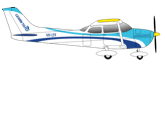
The Cessna 172 is one of the aircraft most strongly associated with beginner and private pilot training. It is a four-seat, single-engine aeroplane with a high wing and tricycle landing gear.
These features are useful for several reasons.
High-wing visibility
A high wing can provide a clear view of the ground below and beside the aircraft. This is helpful when students are learning to identify visual reference points, inspect the circuit and conduct navigation exercises.
However, the wing can obstruct visibility in the direction of a turn. Therefore, students must still learn correct lookout techniques.
Tricycle landing gear
Tricycle landing gear places two main wheels behind the aircraft’s centre of gravity and a steerable nosewheel at the front. This arrangement is generally easier for a new student to manage on the ground than conventional tailwheel landing gear.
Nevertheless, students still need to develop accurate directional control. Crosswinds, excessive speed and poor control positioning can create problems in any training aircraft.
Stable handling
Many Cessna 172 variants provide predictable handling when flown correctly. That helps students recognise changes in attitude, airspeed and control pressure.
Yet describing an aircraft as stable does not mean it corrects every pilot error. Poor airspeed control, an uncoordinated turn or incorrect stall recovery can still create a serious situation.
Familiar cockpit arrangement
Cessna 172 aircraft are operated by flight schools, private owners and organisations in many countries. As a result, students may find it easier to continue flying a similar model after gaining a licence.
However, equipment differs between aircraft. One Cessna 172 may have traditional analogue instruments, while another may have an integrated glass cockpit. Engine type, propeller, avionics, weight limits and operating procedures can also vary.
A pilot must be trained and competent in the actual aircraft configuration being flown.
Useful training capacity
A four-seat cabin allows an instructor and student to conduct normal dual training while retaining space for approved observers or equipment where operationally appropriate.
Still, four seats do not mean that four adults can always be carried. The allowable load depends on fuel, baggage, occupant weights, aircraft configuration and centre of gravity limits.
Weight and balance calculations are therefore essential before flight.
Australian Licence Pathways After a Cessna Pilot Center Search
Most Australian students will follow one of three initial licence pathways: the Recreational Pilot Licence, Private Pilot Licence or Commercial Pilot Licence.
The right choice depends on why you want to fly.
Recreational Pilot Licence
The Recreational Pilot Licence, or RPL, is an Australian entry-level licence for pilots who want to fly light, single-engine aircraft under specified limitations.
CASA states that an applicant must be at least 16, meet the applicable English and medical requirements, complete training with a Part 141 operator, pass the theory examination, complete the required experience and pass a flight test.
The prescribed minimum aeronautical experience is 25 hours, including 20 hours of dual instruction and five hours as pilot in command. These are regulatory minimums, not promises that every student will be test-ready after exactly 25 hours. CASA recreational pilot licence guidance explains the current pathway and operating limitations.
Without additional endorsements, an RPL holder faces restrictions relating to navigation, controlled airspace, controlled aerodromes and radio use.
Therefore, ask whether the proposed course includes the endorsements needed for your expected flying.
Private Pilot Licence
A Private Pilot Licence, or PPL, is appropriate for people who want broader private flying privileges.
A PPL can support longer navigation flights and further training such as night visual flight rules, instrument flying or multi-engine operations. However, the holder cannot simply use a PPL to work as a paid commercial pilot.
CASA requires PPL applicants to be at least 17 and to satisfy theory, English, medical, security, experience and flight-test requirements.
For an aeroplane PPL, the regulatory minimum aeronautical experience is 35 hours for an integrated course or 40 hours for a non-integrated course. The requirements also include solo time, solo cross-country experience and basic instrument training.
Importantly, a minimum is not an average. Weather interruptions, lesson frequency, previous experience and individual progress can all affect the total time required.
The CASA private pilot licence requirements provide the official experience tables and application steps.
Commercial Pilot Licence
A Commercial Pilot Licence, or CPL, is the main licence required for pilots who intend to fly professionally within the privileges and limitations of their qualifications.
CASA requires an applicant to be at least 18, complete the applicable theory examinations, train with a Part 141 or Part 142 operator, meet experience requirements and pass the CPL flight test.
For an aeroplane CPL, the minimum aeronautical experience is currently 150 hours through an integrated course or 200 hours through a non-integrated pathway. Specific pilot-in-command, cross-country and instrument requirements also apply.
The integrated course is not automatically better for every student. It is usually more structured and intensive. Meanwhile, a non-integrated pathway may offer greater flexibility, although it has a higher total minimum experience requirement.
Students considering professional training should review the CASA commercial pilot licence pathway before comparing school packages.
A CPL alone does not guarantee an airline position. Airlines and other operators may require further ratings, experience, examinations, checks and recruitment assessments.
Checklist for Choosing Cessna Pilot Center Style Training
Use this numbered checklist before paying a substantial deposit.
- Define your intended outcome
Decide whether you want a trial flight, RPL, PPL, CPL or advanced rating. A school cannot recommend the right course without knowing your goal. - Confirm the operator’s CASA authorisation
Ask whether the operator is approved under Part 141, Part 142 or both. Then confirm that its approval covers your intended course. - Check the actual aircraft fleet
Do not rely on a stock photograph. Ask how many Cessna aircraft are operational, how often they are available and which model you are likely to fly. - Ask about instructor continuity
A change of instructor is not always harmful. In fact, flying with several instructors can expose you to different teaching styles. However, constant unplanned changes can lead to repetition and inconsistent feedback. - Request a complete cost breakdown
Ask what is included in the quoted figure. Check for aircraft hire, instructor time, briefings, theory, examinations, equipment, landing charges, flight tests and administrative fees. - Review the lesson cancellation policy
Flying depends on weather, aircraft serviceability and instructor availability. Understand how cancellations are handled and whether prepaid funds remain available. - Inspect training records and progress reporting
A structured programme should show the competencies covered, the standard achieved and the next training objective. - Ask how often you should fly
Frequent lessons may improve continuity. Long gaps can lead to extra revision, although the best schedule depends on your availability and learning pace. - Discuss aircraft transitions
Ask whether you will remain on one aircraft type or move between models. If a transition is planned, confirm how differences training will be conducted. - Take an introductory flight
A trial lesson allows you to observe the aircraft, instructor communication, aerodrome environment and overall school culture before making a larger commitment.
What Good Cessna Pilot Center Style Training Should Include
A structured course should do more than take the student flying. It should connect theory, preparation, airborne practice and post-flight feedback.
Pre-flight briefing
Before each lesson, the instructor should explain:
- The lesson objective
- The relevant theory
- The manoeuvres to be flown
- Common errors
- Safety considerations
- The required completion standard
A student should know why the exercise matters before entering the aircraft.
Aircraft preparation
Students should progressively learn how to:
- Review aircraft documents
- Inspect maintenance release information
- Conduct an external inspection
- Check fuel and oil
- Calculate weight and balance
- Assess aircraft performance
- Review weather and operational information
- Make a reasoned go or no-go decision
Initially, the instructor will provide close guidance. Later, the student should assume more responsibility.
Airborne instruction
Flying lessons usually progress from basic aircraft control to more complex operations.
Early exercises may cover:
- Straight and level flight
- Climbing and descending
- Turning
- Airspeed control
- Circuit procedures
- Take-offs and landings
- Stall recognition and recovery
- Emergency procedures
Later training may include navigation, controlled airspace, instrument appreciation, diversions and abnormal situations.
The exact sequence depends on the syllabus, licence and student progress.
Post-flight debriefing
A useful debrief should identify what went well, what needs improvement and what the student should prepare before the next lesson.
Vague comments such as “that was fine” are not enough. Feedback should be linked to observable performance.
For example, an instructor might explain that the student maintained altitude well but allowed airspeed to reduce during steep turns. The next lesson can then focus on power, attitude and scan.
Ground theory integration
A Cessna Pilot Center style curriculum is most effective when ground study supports the current flying phase.
Students should understand subjects such as:
- Aerodynamics
- Aircraft systems
- Meteorology
- Navigation
- Human factors
- Flight rules
- Radio procedures
- Performance and flight planning
Theory should not be treated only as an examination hurdle. It supports decisions in the aircraft.
Does Aircraft Type Determine Training Quality?
No. Aircraft type influences the learning environment, but it does not determine instructional quality.
A well-maintained Cessna 172 with poor scheduling and inconsistent instruction may provide a worse experience than another aircraft supported by strong instructors and reliable systems.
Likewise, a modern glass cockpit does not automatically create better pilots. Advanced displays can improve situational awareness when used correctly. However, students still need to understand attitude, energy, weather, navigation and aircraft limitations.
When comparing aircraft, consider:
- Serviceability and availability
- Cockpit condition
- Avionics
- Performance
- Training suitability
- Operating costs
- Standardisation across the fleet
- Access to simulators or procedure trainers
- Relevance to later training
From a training-planning perspective, fleet consistency is often more valuable than appearance. If several aircraft have similar controls and avionics, students may spend less time adjusting between configurations.
However, exposure to different aircraft can also build adaptability when introduced at the right stage.
Understanding Cessna Flight Training Costs
Flight training prices vary significantly. Therefore, a single advertised hourly rate rarely shows the full expected cost.
Aircraft hire
Some schools quote aircraft hire separately. Others quote a dual training rate that includes the aircraft and instructor.
Ask whether the aircraft rate is “wet”, meaning fuel is included, or whether fuel charges are added separately.
Instructor and briefing time
The aircraft engine may run for one hour, but the instructor may spend additional time on the briefing and debriefing.
Consequently, the amount charged may exceed the recorded flight time.
Landing and aerodrome charges
Some aerodromes charge landing, navigation or facility fees. These may be included in the course or charged after each flight.
Theory and examinations
Theory tuition, online learning platforms, textbooks and examination fees may be separate from flight training.
Equipment
Students may need a headset, logbook, charts, flight computer, kneeboard and other materials. Avoid buying expensive equipment before confirming what the school recommends.
Flight test costs
A flight test may involve examiner fees, aircraft hire and additional briefing time. If the test is postponed because of weather, extra costs may arise.
Additional training hours
Regulatory minimums are not fixed package completion times. Some students need additional hours to reach the required competency.
This is not necessarily evidence of poor performance or poor instruction. Learning rates differ. However, the school should explain your progress clearly and provide updated estimates.
Questions to ask about a package
Ask the school:
- Is the figure based on regulatory minimum hours?
- How many hours do similar students commonly complete?
- Which items are excluded?
- Can prices change during the course?
- Are unused prepaid funds refundable?
- What happens if I pause training?
- Will I receive an itemised account?
Do not choose solely on the lowest advertised total. A slightly higher hourly rate may offer better value when aircraft and instructors are consistently available.
Australian Training Versus an Overseas Cessna Pilot Center
An overseas course can appear attractive because of location, aircraft availability or an intensive timetable. However, Australians must consider the licensing system attached to that course.
Training completed under another country’s rules does not automatically become an Australian licence.
A student may need to address:
- Recognition of overseas flight experience
- Conversion examinations
- Australian flight tests
- English language requirements
- Medical requirements
- Security checks
- Logbook evidence
- Aircraft category and class ratings
- Australian operational procedures
- Visa and study conditions
Therefore, obtain current guidance before enrolling overseas.
Do not assume that training in the same aircraft creates identical qualifications. A Cessna 172 flown under an American syllabus is physically similar to a Cessna 172 flown in Australia, but the licensing standards, airspace procedures, radio terminology and administrative pathway may differ.
For Australians who intend to work locally, a domestic course can reduce conversion uncertainty. Conversely, overseas training may be appropriate for someone who understands the conversion process and has a specific reason to train abroad.
Common Cessna Pilot Center Mistakes to Avoid
Choosing solely because of the Cessna name
Cessna is a respected aircraft brand, but branding does not replace regulatory approval, aircraft maintenance or good instruction.
Assuming every Cessna 172 is identical
Different generations may use different engines, avionics, fuel systems and operating procedures. Students must use the correct aircraft flight manual and checklists.
Expecting to finish at minimum hours
Minimum experience figures are eligibility thresholds. Students must also meet the required competency standard.
Paying a large amount without written terms
Before prepaying, review refund conditions, expiry periods, price adjustments and cancellation rules.
Ignoring the medical process
A medical issue discovered late in training can delay or restrict a planned pathway. Discuss the appropriate medical certificate early, particularly when pursuing commercial aviation.
Flying too infrequently
Long gaps can increase revision time. A realistic schedule is usually better than an ambitious plan that cannot be maintained.
Focusing only on the aircraft
Instructor quality, weather, aerodrome congestion, lesson availability and course administration can affect progress as much as the aircraft type.
People Also Ask About Cessna Pilot Center Training
Is there a Cessna Pilot Center in Australia?
Individual providers may use Cessna aircraft or branded training resources, but the term is not a CASA approval category. Confirm whether the Australian operator holds the Part 141 or Part 142 authorisation required for your course.
Can I get an Australian pilot licence in a Cessna 172?
Yes, a Cessna 172 can be used for many Australian aeroplane training activities when operated by an appropriately authorised school. Your licence is awarded for meeting CASA requirements, not simply for flying a particular aircraft model.
Is a Cessna 172 suitable for a beginner?
The Cessna 172 is widely used for initial instruction because of its layout, visibility and predictable handling when operated correctly. However, suitability also depends on the aircraft’s condition, the instructor and the student’s individual needs.
Is a Cessna Pilot Center better than another flying school?
Not automatically. A branded curriculum can provide structure, but students should compare CASA approval, instructor continuity, aircraft availability, pricing, safety culture and training outcomes.
How long does it take to learn to fly a Cessna?
The timeframe depends on lesson frequency, weather, aircraft availability and the licence being pursued. Regulatory minimum hours should not be treated as a guaranteed completion time.
Expert Q&A About Cessna Pilot Center Training
1. Will Cessna flight hours count towards an Australian licence?
Flight time may count when it meets the applicable regulatory conditions and is recorded correctly. What matters is the nature of the flight, the aircraft category, who supervised it and whether it satisfies the experience required for the relevant licence or rating.
2. Should I learn with analogue instruments or a glass cockpit?
Both can support effective training. Analogue instruments may encourage a deliberate instrument scan, while a glass cockpit introduces integrated navigation and flight information. The better choice depends on course objectives, fleet availability and the aircraft you expect to fly later.
3. Can I change from a Cessna to another training aircraft?
Yes. However, you should receive an appropriate briefing and training on differences such as cockpit layout, handling, fuel systems, speeds, checklists and performance. Changing too often during early training may reduce continuity.
4. Does completing a Cessna course qualify me for an airline job?
No single initial course guarantees airline employment. Professional pilots generally require a CPL, relevant ratings, medical certification, operational experience and successful completion of employer recruitment and training processes.
5. What should I inspect during a school visit?
Observe the condition of the aircraft and facilities, but also examine how the school operates. Ask about booking availability, instructor turnover, maintenance disruptions, progress records, safety reporting, pricing and the process for resolving student concerns.
Conclusion: Choosing the Right Australian Training Pathway
The term cessna pilot center is useful when searching for structured flight instruction and Cessna aircraft. However, it should not be mistaken for an Australian licence or CASA approval.
Australian students should first identify their intended outcome. Then they should confirm the school’s authorisation, compare course structures, inspect the fleet and request a realistic cost estimate.
The Cessna 172 can be an effective training aircraft. Its familiar layout, high wing and widespread use make it attractive to many students. Nevertheless, good instruction, consistent practice and sound decision-making remain more important than the name painted on the aircraft.
Before committing to a full programme, consider taking an introductory lesson, meeting an instructor and discussing your intended pathway. To explore Australian recreational, private and commercial aviation training options, visit professional pilot training programs in Melbourne.