
June 30, 2026
Cost of Pilot Training in Melbourne: Essential Guide for Australia
If you are researching the cost of pilot training in Melbourne, you are probably trying to answer one practical question: “How much money do I need before I can realistically start flying?” In Australia, the answer depends on your goal, your licence pathway, your training pace, your aircraft choice, and how well you prepare between lessons.
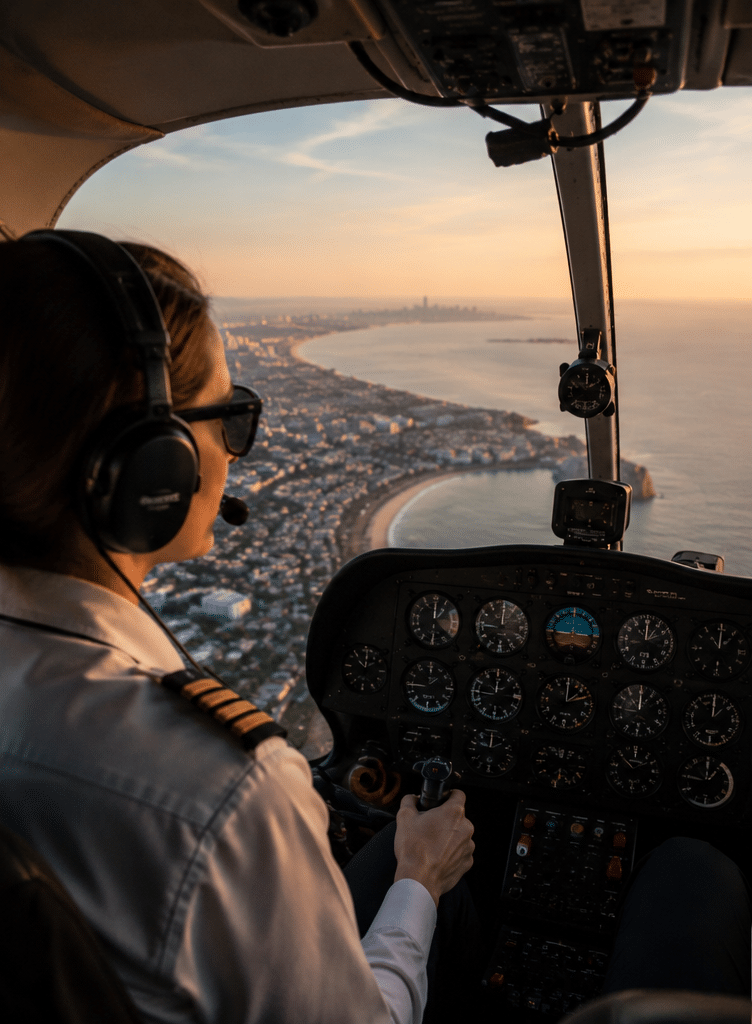
Melbourne is one of Australia’s strongest flight training locations because students can train around busy general aviation environments, structured airspace, coastal weather, and real radio procedures. Moorabbin Airport, for example, describes itself as Victoria’s leading general aviation flight training airport, which makes it a familiar starting point for many student pilots in Melbourne.
What Is the Cost of Pilot Training in Melbourne?
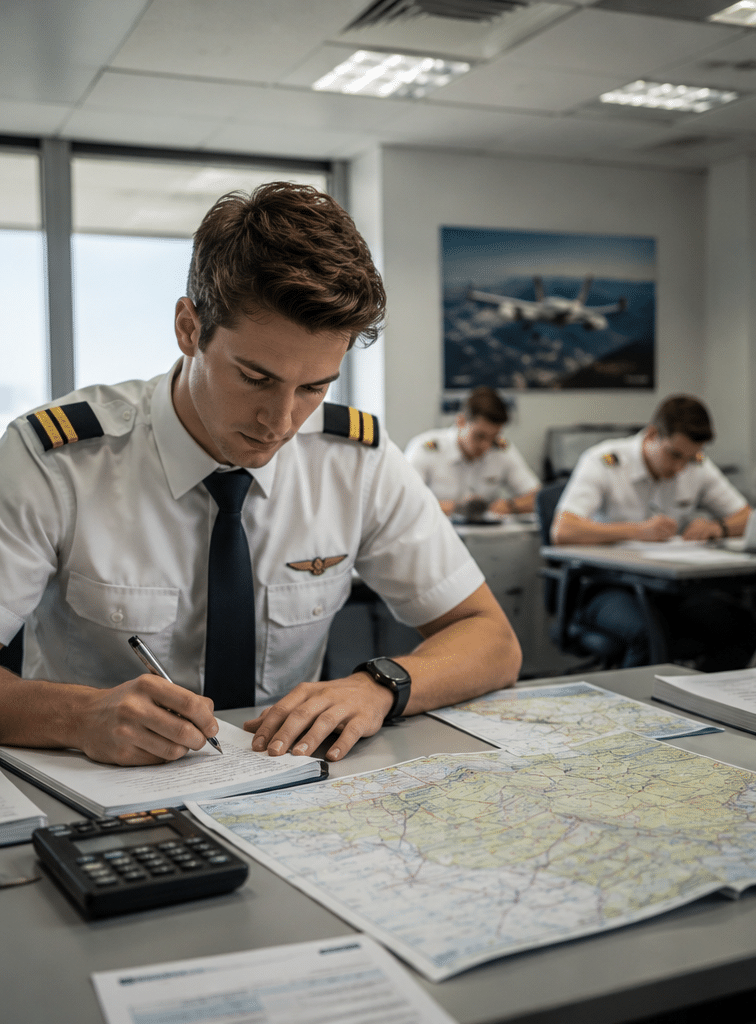
Pilot training Melbourne cost usually ranges from about $15,000–$25,000 for a Recreational Pilot Licence, $25,000–$45,000+ for a Private Pilot Licence pathway, and $80,000–$120,000+ for a Commercial Pilot Licence pathway. Final costs vary by aircraft, lesson frequency, theory progress, weather, exams, medicals, and extra practice.
Table of Contents
- Why Pilot Training Melbourne Cost Varies
- Pilot Licence Pathways in Australia
- Pilot Training Melbourne Cost by Licence Type
- What Is Included in Flight Training Costs?
- Hidden and Often-Forgotten Costs
- Onshore vs Offshore Pilot Training Cost Comparison
- Checklist: How to Budget Before You Start
- How to Reduce Your Pilot Training Melbourne Cost
- People Also Ask
- Q&A: Expert Answers on Pilot Training Melbourne Cost
- Conclusion
Why Cost of Pilot Training in Melbourne Varies
The first thing to understand is that flight training is not priced like a normal classroom course. You are paying for aircraft hire, instructor time, fuel, maintenance, insurance, airport charges, briefing time, simulator use, theory support, exams, and flight tests.
Therefore, two students can enrol in the same course and finish with different totals. One student may complete each milestone near the minimum hours. The other may need extra consolidation flights because they train irregularly, take long breaks, or struggle with radio calls, navigation, landings, or weather decision-making.
The Civil Aviation Safety Authority, known as CASA, sets licensing and safety requirements in Australia. CASA says a pilot licence pathway generally requires a current medical certificate appropriate to the licence, theory exams, relevant flight training, minimum flying hours, and a flight test.
That means the cost of pilot training in Melbourne is best understood as a budget range, not a fixed promise.
The biggest cost drivers
The main cost drivers are:
- Aircraft type and hourly rate
- Dual instruction hours
- Solo practice hours
- Simulator hours, where applicable
- Ground theory support
- Exam and flight test fees
- Airport landing and navigation charges
- Training frequency
- Weather delays
- Student preparation between lessons
From my experience reviewing flight training budgets, the students who manage costs best are not always the fastest learners. Instead, they are usually the most consistent. They fly regularly, revise theory before each lesson, arrive prepared, and ask early when something is unclear.
Pilot Licence Pathways in Australia
Before comparing the cost of pilot training in Melbourne, you need to know which licence you are aiming for.
Australia’s common aeroplane pathway is:
- Trial introductory flight
- Recreational Pilot Licence, or RPL
- Private Pilot Licence, or PPL
- Commercial Pilot Licence, or CPL
- Optional ratings, such as instrument, multi-engine, instructor, or night VFR
CASA provides official information on Australian pilot licence types through its pilot licences guidance. That guidance is important because licence privileges affect both cost and career planning.
Recreational Pilot Licence
The RPL is the entry-level licence for many students. CASA says an RPL allows you to fly a light, single-engine aircraft as pilot in command without supervision. To obtain an RPL, students must meet requirements including age, English, medical, theory, training, at least 25 flying hours, and an RPL flight test. CASA breaks those 25 hours into 20 hours dual and 5 hours pilot-in-command.
The RPL is suitable if you want to fly recreationally, build confidence, or begin a staged pathway to the PPL or CPL.
Private Pilot Licence
The PPL gives more freedom. CASA says a PPL lets you command or co-pilot an aircraft in a private operation and do flying training. For aeroplane students, CASA lists 35 hours for an integrated course and 40 hours for a non-integrated course as minimum aeronautical experience, although it also notes that an average student often qualifies for a PPL after 55–60 flying hours.
This difference matters for pilot training in Melbourne cost because budgeting only for minimum hours may leave you short.
Commercial Pilot Licence
The CPL is the pathway if you want to be paid to fly. CASA says a CPL is required to fly an aircraft for work purposes and requires theory exams, training with a Part 141 or Part 142 operator, minimum aeronautical experience, a flight test, and an appropriate medical certificate. For aeroplane CPL training, CASA lists 150 hours for integrated training and 200 hours for non-integrated training.
Because of those hours, the CPL is usually the largest training investment.
Pilot Training Melbourne Cost by Licence Type
The following figures are practical planning estimates for Melbourne students in 2026. They are not quotes. Actual fees should always be confirmed with your chosen training provider before enrolment.
| Training goal | Typical purpose | Indicative Melbourne budget | Why the range varies |
| Trial introductory flight | First experience before enrolment | $150–$400 | Aircraft type, duration, instructor time |
| RPL pathway | Recreational flying and first licence milestone | $15,000–$25,000 | Extra landing practice, aircraft type, test readiness |
| PPL pathway | Private navigation and broader flying privileges | $25,000–$45,000+ | RPL foundation, navigation hours, theory, flight test |
| CPL pathway | Professional pilot training | $80,000–$120,000+ | Integrated vs non-integrated, aircraft mix, theory, tests |
| Instrument or advanced ratings | Career progression after CPL/PPL | Varies widely | Simulator use, multi-engine aircraft, rating complexity |
The best way to estimate the cost of pilot training in Melbourne is to ask for an itemised quote. A useful quote should show aircraft hourly rates, instructor rates, assumed hours, theory inclusions, exam fees, flight test fees, landing fees, simulator use, uniform or materials, and payment timing.
What Is Included in Flight Training Costs?
A flight training bill is built from several parts. Understanding each part helps you compare schools fairly.
Aircraft hire
Aircraft hire is usually the largest line item. A modern training aircraft may cost more per hour than an older basic trainer, but it may also offer better avionics, comfort, reliability, and training continuity.
However, cheaper hourly hire does not always mean cheaper total training. For example, if an aircraft has limited availability, a student may train less often and need extra revision flights.
Instructor time
Dual instruction includes time in the aircraft with an instructor. Many schools also charge for pre-flight and post-flight briefings. These briefings are valuable because they explain the “why” behind each exercise.
For instance, a landing lesson is not just about touching down. It involves energy management, circuit spacing, radio calls, wind correction, runway judgement, and go-around decision-making.
Theory training
Theory can be self-paced, classroom-based, online, or blended. Although self-study may look cheaper, many students benefit from structured theory support, especially for air law, navigation, meteorology, aircraft performance, and human factors.
CASA lists theory exams as part of the licensing pathway, so theory should be treated as a core training cost, not an optional extra.
Exams and flight tests
Exam and flight test fees can add up. CASA’s CPL exam pages show individual exam fees and pass mark requirements, and CPL candidates must pass all required subjects within the relevant time window.
Therefore, a serious CPL budget should include theory preparation time, exam bookings, possible resits, and flight test readiness.
Medical and administration
Aviation medicals, English language checks, aviation reference numbers, security checks, and CASA applications are administrative steps. They are not legal advice topics; they are compliance and enrolment tasks that should be confirmed with your school, CASA, and any relevant licensed migration or education agent where applicable.
Hidden and Often-Forgotten Costs
When people search pilot training Melbourne cost, they often focus on flying hours. However, the hidden costs can be the difference between a smooth pathway and a stressful one.
Common forgotten items include:
- Aviation medical appointment fees
- Headset purchase or hire
- Textbooks and online theory access
- Charts, flight planning tools, or subscriptions
- Landing fees at training airports
- CASA exam fees
- Flight test fees
- Extra practice before tests
- Transport to and from the airport
- Accommodation if relocating to Melbourne
- International student health cover, if applicable
- Visa-related administration, where applicable
- Time away from work
A safe budget includes a contingency. For RPL and PPL students, adding 10–20% above the quoted package can help cover delays, extra practice, or changes in aircraft availability. For CPL students, a larger contingency may be sensible because the course is longer and more complex.
Onshore vs Offshore Pilot Training Cost Comparison
Some students compare training in Australia with cheaper overseas options. However, cost is only one part of the decision.
| Factor | Training in Melbourne, Australia | Training offshore |
| Licence alignment | Directly aligned with CASA pathway | May require conversion or extra checks |
| Airspace exposure | Australian radio, weather, procedures, and controlled airspace | May differ from Australian operations |
| Cost certainty | Higher hourly cost, but fewer conversion unknowns | Lower advertised cost may hide conversion costs |
| Career relevance | Strong for students planning to work in Australia | Depends on recognition and conversion |
| Support network | Easier if living in Australia | May require relocation and extra admin |
| Weather and operations | Real local conditions around Victoria | Conditions vary by country |
| Best for | Students targeting Australian licences and local experience | Students with clear conversion advice and budget buffers |
For many Australian students, onshore training feels more expensive at first. However, it can reduce uncertainty because the training is already built around Australian rules, CASA expectations, local weather, and local radio procedures.
Checklist: How to Budget Before You Start
Use this numbered checklist before committing to any pilot training melbourne cost package.
- Choose your end goal. Decide whether you want recreational flying, private travel, or a professional pilot career.
- Confirm the licence pathway. Ask whether your training is RPL, PPL, CPL, integrated, or non-integrated.
- Ask for the assumed flying hours. Compare those hours with CASA minimums and realistic average completion ranges.
- Request an itemised quote. Separate aircraft hire, instructor fees, theory, exams, tests, landing fees, and materials.
- Check what is excluded. Ask about medicals, headsets, charts, airport fees, resits, extra flights, and cancellation policies.
- Plan your training frequency. Weekly or twice-weekly flying usually supports better retention than long gaps.
- Budget a contingency. Add a buffer for weather, illness, aircraft maintenance, and extra consolidation flights.
- Check funding options. Diploma-level training may have government loan pathways if the course and provider are eligible.
- Visit the school. Look at aircraft, simulators, briefing rooms, instructor availability, and student support.
- Book a trial flight. A trial lesson helps you confirm comfort, motivation, and fit before a major commitment.
Funding and Student Loan Considerations
For career students, funding can be a major part of the pilot training Melbourne cost conversation.
The Australian Government’s Department of Employment and Workplace Relations explains that VET Student Loans can help eligible students pay tuition fees for approved diploma-level and above VET courses at approved providers.
In addition, StudyAssist states that the 2026 HELP loan limit is $129,883 for most students and $186,544 for students studying medicine, dentistry, veterinary science, or eligible aviation courses with census dates in 2026.
However, a loan limit is not the same as automatic approval. Eligibility, course approval, census dates, provider approval, citizenship or residency status, and individual circumstances all matter. Therefore, students should confirm funding details directly with official government sources and their chosen provider.
How to Reduce Your Cost of Pilot Training in Melbourne
You cannot remove the genuine cost of safe flight training. However, you can reduce waste.
Fly consistently
Consistency is one of the simplest ways to control costs. If you fly once every six weeks, you may spend much of each lesson regaining confidence. If you fly weekly, your skills usually build faster.
Prepare before every lesson
Read the lesson notes. Watch approved training material. Review radio calls. Check weather. Know the objective before you arrive.
A prepared student uses paid aircraft time more efficiently.
Use simulators wisely
Simulators can be useful for procedures, checks, radio practice, instrument scans, and navigation flows. They do not replace all aircraft time, but they can make aircraft time more productive.
Ask for feedback early
If you are repeating the same error, ask your instructor to break it down. For example, poor landings may come from unstable approach speed, late flare timing, poor centreline tracking, or weak lookout. The fix depends on the cause.
Do theory alongside flying
Theory makes practical lessons easier. For example, meteorology helps you understand wind, turbulence, cloud, and visibility. Navigation theory helps you plan flights with less stress.
Choose the right aircraft
A premium aircraft may suit a career-minded student who wants modern avionics exposure. A simpler aircraft may suit early licence training. The cheapest option is not always best, but the most expensive is not always necessary.
People Also Ask
How much does it cost to become a pilot in Melbourne?
For planning, expect around $15,000–$25,000 for RPL, $25,000–$45,000+ for a PPL pathway, and $80,000–$120,000+ for CPL training. The final pilot training Melbourne cost depends on aircraft type, lesson frequency, theory progress, and how many extra hours you need.
Is Melbourne a good place to learn to fly?
Yes, Melbourne is a strong training location because students can experience real airspace, coastal weather, busy radio environments, and established aviation infrastructure. However, the right school, instructor fit, and training schedule matter more than location alone.
Can I pay for pilot training in instalments?
Many providers offer staged payments, pay-as-you-fly options, or package structures. Diploma-level aviation courses may also have government loan options if the course and provider are approved and the student is eligible.
What is the cheapest pilot licence in Australia?
The RPL is usually the lowest-cost CASA pilot licence pathway because it requires fewer hours than PPL or CPL. However, “cheapest” should not mean rushed; students still need safe competency, theory understanding, and test readiness.
Do I need a CPL to work as a pilot?
Yes, if you want to fly for work purposes, you generally need a CPL or higher qualification appropriate to the operation. CASA states that a CPL is required if you would like to fly an aircraft for work purposes.
Q&A: Expert Answers on Pilot Training Melbourne Cost
1. Why do advertised costs differ so much between flight schools?
Advertised costs differ because schools may include different items. One package may include theory, exams, briefing, and flight test fees, while another may only show aircraft and instructor time. Always compare inclusions line by line before choosing.
2. Should I budget based on CASA minimum hours?
No. CASA minimums are useful for understanding the regulatory baseline, but many students need extra hours to become confident and test-ready. CASA itself notes that an average PPL student may qualify after 55–60 flying hours, even though minimum course hours can be lower depending on the pathway.
3. Is full-time training cheaper than part-time training?
Full-time training can be more efficient because skills are reinforced daily or weekly. However, it requires stronger cash flow and schedule flexibility. Part-time training can work well if you fly consistently and keep theory moving between lessons.
4. What should international students include in their Melbourne budget?
International students should consider tuition, accommodation, transport, health cover, visa-related administration, English requirements, and living costs. They should also confirm CRICOS, enrolment, and visa requirements through official channels or a licensed migration professional where needed.
5. Can I start with RPL and upgrade later?
Yes. Many students start with RPL and continue to PPL or CPL. This staged approach can make the cost of pilot training in Melbourne easier to manage because you build skills and confidence in milestones instead of committing to the full professional pathway immediately.
Conclusion
The real answer to the cost of pilot training in Melbourne is not a single number. It is a planned investment shaped by your licence goal, aircraft choice, training frequency, theory progress, and test readiness.
For recreational students, the RPL can be a practical first milestone. For private flyers, the PPL opens broader navigation privileges. For career pilots, the CPL pathway requires a larger budget, stronger commitment, and careful funding planning.
The smartest next step is to compare itemised costs, understand CASA requirements, plan a realistic contingency, and speak with a training team about your goals. To explore structured flight training pathways in Melbourne, visit Learn To Fly Melbourne’s pilot training programs