learn to fly
Table of Contents
- Introduction
- What Does It Mean to Learn to Fly?
- Why Learn to Fly in Australia?
- Learn to Fly: Licence Options in Australia
- Step-by-Step Checklist to Learn to Fly
- Medical Requirements Explained
- How Much Does It Cost to Learn to Fly?
- Training Timeline: How Long Does It Take?
- Flight School Comparison Table
- What to Expect in Your First Flying Lesson
- Safety, Standards and CASA Oversight
- Career Pathways After You Learn to Fly
- People Also Ask
- Expert Q&A Section
- Conclusion
Introduction
Many Australians search “learn to fly” each year because aviation offers freedom, challenge and genuine career opportunities. Whether you want to fly recreationally or pursue a professional aviation career, learning to fly in Australia is structured, regulated and achievable with the right guidance. From my experience working alongside student pilots and instructors, the key to success is understanding the process clearly before you begin.
Australia has one of the world’s most respected aviation safety systems. Training is regulated by the Civil Aviation Safety Authority (CASA), which ensures standards are consistent nationwide. As a result, when you learn to fly here, your qualifications are internationally respected.
However, many aspiring pilots feel overwhelmed at first. What licence do you need? How much does it cost? How long does it take? This guide answers those questions clearly, using Australian terminology and verified sources.
What Does It Mean to Learn to Fly?
To learn to fly in Australia means completing structured flight training under CASA regulations to safely operate an aircraft. Students undertake theory study, practical flight lessons and medical certification before earning a pilot licence such as a Recreational, Private or Commercial Pilot Licence.
Why Learn to Fly in Australia?
Australia offers unique advantages for flight training.
Firstly, the country’s diverse geography provides exposure to coastal, rural and controlled airspace environments. Secondly, weather conditions in many regions allow year-round training. Finally, Australian aviation standards are globally respected.
According to the Civil Aviation Safety Authority (CASA), Australia maintains a strict regulatory framework designed to uphold aviation safety. CASA sets licensing standards, medical requirements and operational rules for pilots.
Additionally, Australia’s aviation industry continues to show long-term demand for skilled pilots. While aviation hiring fluctuates with economic cycles, regional airlines, charter operations and flight schools consistently require qualified professionals.
Learn to Fly: Licence Options in Australia
Before you learn to fly, you need to understand your licence pathway. In Australia, pilot licences are issued under Part 61 of the Civil Aviation Safety Regulations.
1. Recreational Pilot Licence (RPL)
- Entry-level licence
- Fly up to 25 nautical miles from departure aerodrome (unless endorsed)
- No requirement to learn controlled airspace initially
- Minimum 25 hours flight time (CASA requirement)
Ideal for hobby pilots who want local flying privileges.
2. Private Pilot Licence (PPL)
- Fly further distances
- Carry passengers
- Operate in controlled airspace (with appropriate endorsements)
- Minimum 40 hours flight time (CASA requirement)
This is the most common licence for private flying.
3. Commercial Pilot Licence (CPL)
- Allows you to be paid to fly
- Minimum 150–200 hours total flight time depending on training pathway
- Required for airline and charter careers
CASA outlines these standards in Part 61 licensing regulations. You can review official requirements on the CASA website.
Step-by-Step Checklist to Learn to Fly in Australia
If you’re ready to begin, follow this structured checklist:
- Choose a CASA-certified flight school
- Complete a Class 1 or Class 2 aviation medical (as required)
- Apply for an Aviation Reference Number (ARN) through CASA
- Begin theory training and ground school
- Start practical flight lessons with a qualified instructor
- Complete required solo flight hours
- Pass the relevant CASA theory exam
- Complete your flight test with a CASA-approved examiner
- Receive your pilot licence
Each step is administrative and safety-focused. Importantly, flight schools typically guide students through these processes; however, medical and licensing approvals remain regulated by CASA.
Medical Requirements Explained
Medical certification is mandatory before you can fly solo.
CASA medicals are conducted by Designated Aviation Medical Examiners (DAMEs). There are different classes:
- Class 1 Medical: Required for Commercial Pilots
- Class 2 Medical: Required for Private Pilots
- Recreational Aviation Medical Practitioner’s Certificate (RAMPC): For some recreational operations
According to CASA’s aviation medical standards, assessments examine vision, hearing, cardiovascular health and overall fitness to ensure aviation safety.
For full guidance, refer to CASA’s aviation medical information:
CASA Aviation Medical Requirements
How Much Does It Cost to Learn to Fly in Australia?
Costs vary depending on the licence type, aircraft category, training structure and fuel pricing.
As a general guide in the current Australian training environment:
- Private Pilot Licence (PPL): Typically ranges between $40,000 and $50,000 AUD
- Commercial Pilot Licence (CPL): Can exceed $95,000 AUD, particularly when including additional ratings such as multi-engine and instrument endorsements
These figures are indicative estimates and may vary between flight schools. Factors influencing cost include aircraft hire rates, instructor fees, landing charges, examination fees and additional flight hours beyond the minimum CASA requirements.
Before enrolling, it is wise to request a detailed cost breakdown from your chosen training provider to understand inclusions and potential additional expenses.
Training Timeline: How Long Does It Take?
How long it takes to learn to fly depends on frequency and consistency.
- Training once per week: 12–18 months for PPL
- Training full-time: 3–6 months for PPL
- Integrated CPL program: 12–18 months full-time
Consistency matters. Skills develop faster when lessons occur regularly. Weather, aircraft availability and personal study habits also influence timelines.
Flight School Comparison Table
Choosing the right school is crucial.
| Factor | Smaller Regional School | Larger Metro Academy |
|---|---|---|
| Student Numbers | Lower | Higher |
| Aircraft Fleet | Limited but personalised | Larger fleet |
| Airspace Exposure | Often non-controlled | Mixed controlled airspace |
| Career Pathways | Limited partnerships | Airline pathway programs |
| Training Pace | Flexible | Structured |
When evaluating schools, consider aircraft maintenance standards, instructor experience and student support systems.
If you’re exploring structured pilot training options, review detailed program pathways at a reputable Australian flight training academy such as this comprehensive pilot training provider:
Professional pilot training programs in Australia
What to Expect in Your First Flying Lesson
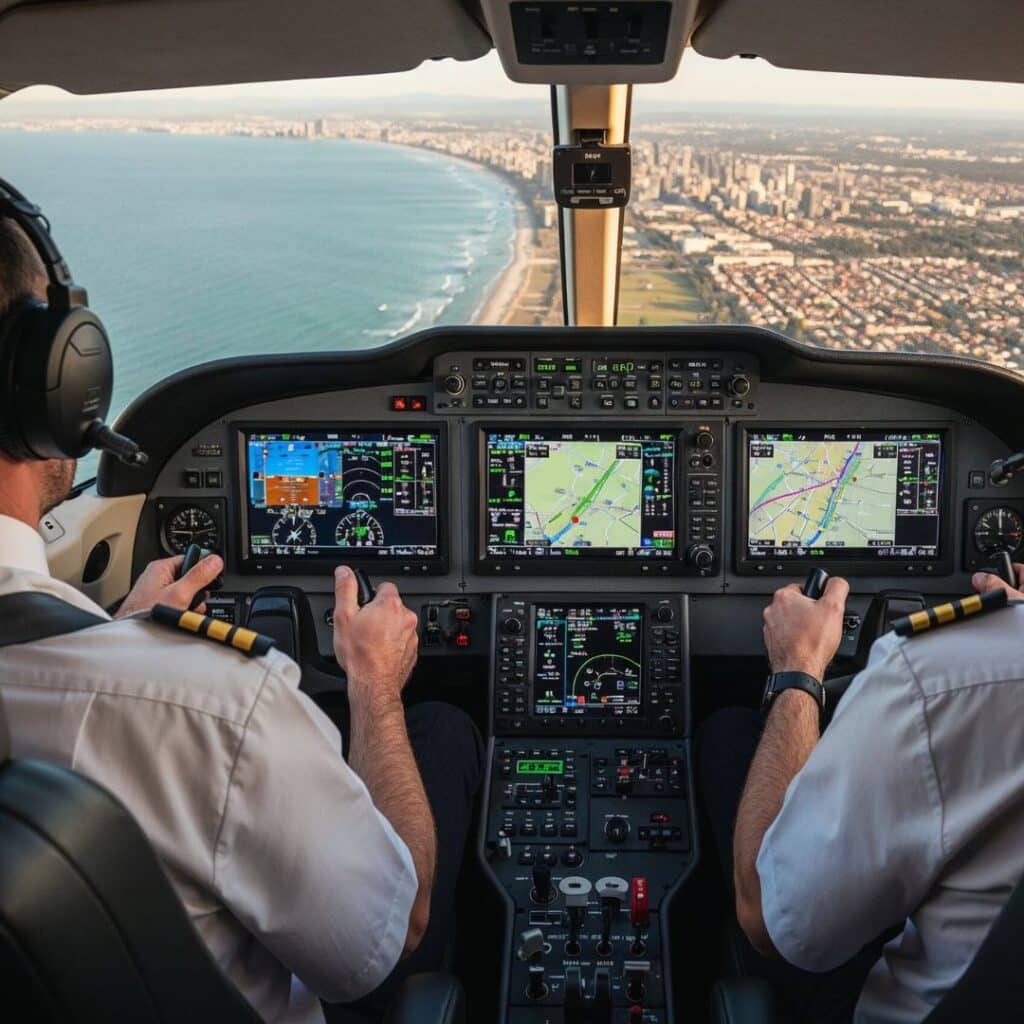
Your first flying lesson is carefully structured to build confidence while introducing you to the fundamentals of aircraft operation. You will not simply observe, you will actively participate under the close supervision of a qualified flight instructor.
Your first lesson typically includes:
- Aircraft safety briefing – An introduction to emergency procedures, cockpit layout, communication protocols and general safety awareness.
- Pre-flight inspection – A guided external and internal inspection of the aircraft to confirm it is serviceable and safe to operate.
- Taxiing practice – Instruction on manoeuvring the aircraft safely on the ground using rudder pedals and controlled throttle inputs.
- Effects of Controls flight – A foundational airborne exercise demonstrating how control inputs affect pitch, roll and yaw, helping you understand how the aircraft responds in flight.
In practice, the “Effects of Controls” exercise is where many students first appreciate how precise and responsive an aircraft can be. It forms the technical basis for all future manoeuvres and navigation training.
Safety, Standards and CASA Oversight
Australia’s aviation framework is built on safety management systems (SMS), instructor standardisation and regulatory oversight.
CASA enforces operational rules under the Civil Aviation Act and Civil Aviation Safety Regulations. These are administrative and regulatory standards, not personal legal advice. Flight schools must operate under approved manuals and audit systems.
According to CASA’s publicly available safety data, Australia maintains strong aviation safety benchmarks compared to global averages.
Career Pathways After You Learn to Fly
Once licensed, options include:
- Private aircraft ownership
- Charter flying
- Flight instruction (with additional rating)
- Regional airline operations
- Corporate aviation
Progression typically follows this structure:
- Commercial Pilot Licence
- Multi-Engine Rating
- Instrument Rating
- Flight Instructor Rating or airline recruitment
Airline recruitment depends on industry cycles, hours logged and regulatory compliance.
People Also Ask
How long does it take to learn to fly in Australia?
Most students complete a Private Pilot Licence within 6–18 months, depending on frequency. Full-time programs can be faster, while part-time training may extend longer due to scheduling and weather.
Is it hard to learn to fly?
Learning to fly requires discipline and study, but it is achievable with structured instruction. Students develop skills progressively, starting with basic control before advancing to navigation and emergency procedures.
How much does it cost to learn to fly in Australia?
Costs vary by licence and aircraft type. A Private Pilot Licence typically ranges between $20,000 and $30,000 AUD, while commercial training can exceed $70,000 AUD.
Do I need perfect eyesight to learn to fly?
No. Many pilots wear glasses or contact lenses. However, you must meet CASA’s minimum aviation medical vision standards.
Expert Q&A Section
1. What theory exams are required when you learn to fly?
For an RPL, theory is often conducted in-house. For a PPL or CPL, CASA requires formal theory exams covering navigation, meteorology, aerodynamics and air law.
2. Can international students learn to fly in Australia?
Yes, but visa and English language requirements apply. Flight schools provide administrative guidance; however, immigration advice should be confirmed through licensed migration professionals.
3. What aircraft types are used in beginner training?
Most Australian schools use single-engine trainers such as Cessna 172 or Piper Warrior aircraft due to reliability, cost efficiency and forgiving handling characteristics.
4. Is learning to fly safe?
Statistically, structured flight training under CASA oversight maintains strong safety standards. Risk is managed through instructor supervision, maintenance programs and regulated procedures.
5. What happens if I fail a flight test?
If a flight test is unsuccessful, you receive targeted retraining before reattempting. Many students require additional practice in certain manoeuvres; this is normal and part of the learning process.
Conclusion
Choosing to learn to fly in Australia is both an exciting and structured journey. With CASA regulation, reputable flight schools and clearly defined licence pathways, aspiring pilots can progress confidently from first lesson to professional qualification.
While costs and timelines vary, consistent training, medical readiness and theory preparation make the process manageable. Most importantly, aviation rewards commitment and discipline.
If you’re ready to begin, explore structured, CASA-aligned training pathways and take your first step toward the cockpit today.