


If you want to become a pilot in Australia, the path is exciting, structured, and more achievable when you understand each step before you begin. From my experience working with aviation training content, the students who progress with the most confidence are the ones who first choose the right licence goal, understand CASA requirements, and train consistently rather than rushing the process.
Australia has a well-regulated aviation system. That is good news for students because it gives your training a clear framework. However, it can also feel confusing at first. You will see terms like RPL, PPL, CPL, ATPL, Class 1 medical, Part 141, Part 142, flight reviews, endorsements, and theory exams.
This guide explains what those terms mean in plain English. It also shows how to compare training options, prepare for your first lesson, and make smart decisions if your long-term goal is recreational flying, private flying, or a professional aviation career.
What Does It Mean to Become a Pilot?
To become a pilot in Australia, you complete flight training with an approved flying school, pass theory exams, meet medical and English requirements, build the required flight hours, and pass a flight test. Your exact pathway depends on whether you want to fly recreationally, privately, or commercially.

Table of Contents
- What “Become a Pilot” Really Means in Australia
- Pilot Licence Pathways in Australia
- How to Become a Pilot: Step-by-Step Checklist
- Choosing the Right Flying School
- RPL, PPL, CPL and ATPL Compared
- Medical Certificates and CASA Requirements
- Theory Exams, Flight Tests and Skills
- How Long Does It Take to Become a Pilot?
- Costs, Budgeting and Training Rhythm
- Onshore vs Offshore Pilot Training
- Common Mistakes New Student Pilots Make
- People Also Ask
- Expert Q&A
- Conclusion
What “Become a Pilot” Really Means in Australia
To become a pilot, you do more than learn how to control an aircraft. You learn how to make safe decisions, read weather, communicate on radio, plan flights, manage workload, and understand aviation rules.
In Australia, pilot licensing is overseen by the Civil Aviation Safety Authority, usually called CASA. According to CASA’s process to become a pilot, students generally need the right medical certificate, theory exam passes, flight training, minimum flight time, and a flight test.
That framework protects you, your passengers, and everyone sharing the airspace. Therefore, it is useful to see pilot training as a safety apprenticeship, not just a qualification.
From my experience, many beginners first ask, “How fast can I get my licence?” A better question is, “Which licence matches the type of flying I want to do?” That one shift can save time, money, and frustration.
For example, a person who wants weekend local flying may not need the same pathway as someone who wants to fly for an airline. Likewise, someone aiming for commercial work should plan their medical, training frequency, and theory study much earlier.
Pilot Licence Pathways in Australia
There is no single route to become a pilot. Instead, Australia has several licence levels. Each one gives different privileges.
The main pathways are:
- Recreational Pilot Licence, often called RPL
- Private Pilot Licence, often called PPL
- Commercial Pilot Licence, often called CPL
- Air Transport Pilot Licence, often called ATPL
You may also hear about ratings and endorsements. A rating adds a larger operational privilege, such as an instrument rating. An endorsement authorises a more specific skill or aircraft feature, such as operating a certain aircraft class or system.
Recreational Pilot Licence
An RPL is often the first CASA licence for people who want to fly locally and recreationally. It is a practical entry point because it focuses on core handling, circuit flying, basic navigation depending on endorsements, and safe decision-making.
However, an RPL has limitations. For example, you may need further endorsements for controlled airspace, navigation, or carrying more passengers. Therefore, students who want broader private flying often continue to the PPL.
Private Pilot Licence
A PPL allows broader private flying. It is a common goal for people who want to fly family, friends, or themselves around Australia without being paid as a pilot.
The PPL stage usually develops stronger navigation, flight planning, aircraft handling, and decision-making. Also, it helps you move from local training-area flying into real-world cross-country flying.
Commercial Pilot Licence
A CPL is for people who want to fly for work. If your goal is to become a pilot professionally, the CPL is the central licence milestone.
A CPL does not automatically make you an airline pilot. However, it can open pathways into roles such as charter, aerial work, instructing after further instructor training, survey flying, tourism operations, and eventually airline pathways with more experience and ratings.
Air Transport Pilot Licence
An ATPL is the highest common airline licence level. It is usually relevant after a pilot has built significant flight experience and completed advanced theory and operational requirements.
For most beginners, the ATPL is a future milestone rather than the starting point. Therefore, focus first on your RPL, PPL, or CPL pathway.
How to Become a Pilot: Step-by-Step Checklist
Use this checklist as a practical starting point. It is not legal advice. It is an administrative and training roadmap that should be confirmed with CASA and your chosen flying school.
- Define your flying goal. Decide whether you want to fly for fun, private travel, or a professional career.
- Book a trial introductory flight. This helps you test your interest before committing to a full course.
- Speak with a CASA-approved flying school. Ask which licence pathway suits your goal.
- Apply for an Aviation Reference Number. This is an administrative identity number used in CASA systems.
- Check your medical pathway early. Professional goals usually require more demanding medical standards.
- Plan your budget. Include aircraft hire, instructor time, theory materials, exams, flight tests, headset, charts, and extra revision flights.
- Create a training schedule. Weekly or twice-weekly lessons often help students retain skills better than long gaps.
- Start theory study early. Weather, navigation, air law, human factors, and aircraft systems are easier when linked to real flights.
- Complete required flight training. Your instructor will guide you through competencies, not just hours.
- Pass theory exams and flight tests. These confirm you can apply knowledge safely.
- Keep learning after your licence. Flight reviews, endorsements, ratings, and good habits matter throughout your flying life.
This checklist is simple, but it works. Moreover, it keeps the focus on safe progress rather than rushing.
Choosing the Right Flying School
Choosing a flying school is one of the biggest decisions you will make when you become a pilot. The right school should match your goals, budget, learning style, and schedule.
CASA provides a flight training operator search for finding Part 141 and Part 142 certificate holders in Australia. In plain English, these are approved flight training organisations that operate under CASA’s training framework.
When comparing schools, look beyond the hourly aircraft rate. A cheaper hourly rate does not always mean a cheaper licence. Training quality, aircraft availability, instructor consistency, briefing standards, maintenance reliability, and weather backup plans all affect your total cost.
Questions to Ask a Flying School
Ask these before enrolling:
- Which licences and ratings do you train for?
- Are you a Part 141 or Part 142 operator?
- How often should I fly to progress efficiently?
- Will I usually train with the same instructor?
- How do you handle weather cancellations?
- What aircraft will I train in?
- What are the estimated total costs, not just hourly rates?
- What theory support do you provide?
- How do you prepare students for flight tests?
- What happens if I need extra lessons?
From my experience, transparent schools are comfortable answering these questions. They will not promise a guaranteed outcome. Instead, they will explain the variables that affect your progress.
RPL, PPL, CPL and ATPL Compared
The best licence depends on what you want to do. Therefore, compare privileges before choosing a pathway.
| Licence | Best For | Typical Purpose | Paid Flying? | Common Next Step |
| RPL | Local recreational flying | Learning core flying skills | No | PPL or endorsements |
| PPL | Private travel and leisure | Carrying passengers privately | No | CPL, instrument rating, endorsements |
| CPL | Aviation career entry | Flying aircraft for work | Yes, within privileges | Instructor rating, instrument rating, job pathway |
| ATPL | Airline command pathway | Advanced airline operations | Yes | Airline captain pathway |
This table is simplified. However, it gives you the main idea. If you want local recreational flying, an RPL may be enough. If you want broader private travel, a PPL may suit you better. If you want aviation employment, a CPL is usually the key step.
Medical Certificates and CASA Requirements
Medical planning is important when you want to become a pilot, especially if you hope to fly commercially.
According to CASA’s aviation medical certificate guidance, a Class 1 medical certificate is needed for exercising the privileges of a commercial pilot licence and air transport pilot licence in most cases. A Class 2 medical is commonly associated with private flying, while other medical options may apply to limited operations.
In plain English, your medical certificate confirms that you meet the health standard for the type of flying you plan to do. It may cover vision, hearing, medical history, medications, mental health, cardiovascular health, and other safety-related factors.
If your goal is commercial aviation, it is wise to complete the relevant medical checks early. That way, you reduce the risk of spending heavily on training before finding a medical issue that needs review.
What Is CASA?
CASA stands for Civil Aviation Safety Authority. It is Australia’s aviation safety regulator. CASA sets rules for pilot licensing, medical certification, exams, flight training, and many aviation operations.
What Is an ARN?
An ARN is an Aviation Reference Number. It is an administrative number used to identify you in CASA systems. You will usually need it for exams, medicals, licence applications, and other aviation records.
What Is GELP?
GELP means General English Language Proficiency. Aviation requires clear English communication, especially on radio. CASA notes that this requirement may apply at the RPL stage.
These items are administrative steps. They are not legal advice. Your flying school can help you understand the process, and CASA remains the authority for current requirements.
Theory Exams, Flight Tests and Skills
To become a pilot, you must learn both practical flying and aviation theory. This matters because safe pilots need knowledge before, during, and after each flight.
Theory areas may include:
- Air law
- Aerodynamics
- Meteorology
- Navigation
- Human factors
- Aircraft general knowledge
- Flight planning
- Performance and loading
- Radio procedures
At first, theory can feel abstract. However, it becomes clearer when you connect it to actual flights. For example, meteorology is not just a textbook subject. It tells you whether cloud, wind, turbulence, visibility, or thunderstorms could affect your flight.
Likewise, performance and loading are not just calculations. They help you decide whether the aircraft can safely take off, climb, and land under the day’s conditions.
Flight Tests
A flight test is not just a final ride. It is a structured assessment of whether you can operate safely within the privileges of the licence.
During training, your instructor will prepare you for normal and abnormal situations. These may include take-offs, landings, navigation, stalls, emergency procedures, radio calls, and decision-making.
Good students do not memorise a test script. Instead, they build habits that work in real conditions.
How Long Does It Take to Become a Pilot?
The time needed to become a pilot in Australia depends on your licence goal, training frequency, weather, aircraft availability, finances, study habits, and individual skill development.
CASA notes that the time to get a pilot licence can depend on factors such as full-time versus ad-hoc training, aircraft availability, weather, and financial situation. CASA also states that an average student may qualify for a PPL after about 55 to 60 flying hours.
That figure is useful, but it should not be treated as a guarantee. Some students need fewer hours, while others need more. Weather, breaks between lessons, and exam preparation can all change the timeline.
Training Frequency Matters
Students who fly regularly often retain skills better. For example, flying twice a week can help you build momentum. On the other hand, flying once every few weeks may mean you spend part of each lesson revising previous skills.
Therefore, the cheapest plan is often not the slowest plan. A consistent schedule can reduce repeated lessons and improve confidence.
Full-Time vs Part-Time Training
Full-time training can help career-focused students move faster. However, it requires stronger upfront budgeting, time availability, and study discipline.
Part-time training suits people with work, family, or study commitments. However, it needs careful scheduling and realistic expectations.
Both options can work. The best choice is the one you can sustain.
Costs, Budgeting and Training Rhythm
Pilot training costs vary across Australia. Aircraft type, airport location, fuel prices, instructor rates, landing fees, theory support, and your learning pace all affect the total.
Because prices change, you should ask each school for a written estimate. Also, ask what is included and excluded.
Common cost items include:
- Trial introductory flight
- Aircraft hire
- Instructor time
- Pre-flight and post-flight briefings
- Theory course or textbooks
- Online training tools
- CASA exams
- Medical certificate
- Flight test fees
- Headset
- Charts and navigation tools
- Uniform or school materials, if required
- Extra revision flights
From my experience, many students underestimate revision time. This is normal. Flight training is competency-based in practice, even when minimum hours exist. Therefore, budget for extra lessons rather than planning only around minimums.
A Practical Budgeting Tip
Build a training buffer. For example, if a school gives you an estimate, consider setting aside extra funds for weather delays, skill consolidation, exam resits, and schedule gaps.
This does not mean you will need all of it. However, it reduces pressure and helps you make safer decisions.
Onshore vs Offshore Pilot Training
Some students compare training in Australia with overseas options. This can be useful, but it must be done carefully.
| Option | Advantages | Challenges | Best Fit |
| Training in Australia | Direct CASA pathway, local airspace experience, easier school visits, Australian weather and radio exposure | Costs may vary by city, weather delays can occur | Students planning to fly in Australia |
| Training overseas | May suit students already living overseas, possible different aircraft or weather exposure | Licence conversion, unfamiliar rules, travel costs, visa issues, different airspace systems | Students with a clear conversion plan |
| Hybrid pathway | Can combine experience from different regions | Requires careful record keeping and CASA guidance | Students with international circumstances |
If your goal is to become a pilot in Australia, training locally has a major advantage. You learn Australian procedures, radio phraseology, weather patterns, and controlled airspace expectations from the beginning.
However, overseas experience may still count in some situations. Before relying on it, confirm the recognition or conversion process with CASA and your training provider.
What You Learn in the Cockpit
Learning to fly is practical, but it is also mental. You learn how to stay ahead of the aircraft.
That means you think before the aircraft forces you to react. For example, before joining a circuit, you consider wind, runway, traffic, radio calls, spacing, and your escape options. Before a cross-country flight, you consider fuel, alternates, weather, daylight, terrain, and airspace.
This mindset is one reason aviation training can be so rewarding. It builds discipline, awareness, and confidence.
Firsthand-Style Insight: What Surprises New Students
From my experience, many new students are surprised by three things.
First, the aircraft is sensitive. Small control inputs matter.
Second, radio work can feel harder than flying at first. This improves with practice.
Third, weather becomes personal. Once you train as a pilot, wind, cloud, visibility, and temperature are no longer background details. They become part of every decision.
How to Become a Pilot for a Career
If your dream is to become a pilot professionally, plan your pathway early. A career route often involves more than completing a CPL.
You may need:
- Class 1 medical planning
- CPL theory exams
- Consistent flight training
- Command hour building
- Night VFR rating, depending on goals
- Instrument rating for many commercial pathways
- Multi-engine training, depending on role
- Instructor rating, if you want to teach
- Strong interview preparation
- Good logbook discipline
- Ongoing flight reviews and proficiency checks
Airlines and operators usually look beyond the licence. They may assess decision-making, communication, teamwork, technical knowledge, training record, attitude, and operational fit.
Therefore, treat every lesson as part of your professional reputation. Be punctual, prepared, humble, and safety-focused.
How to Become a Pilot for Recreation
Not everyone wants an airline career. Many people become a pilot because they love aviation, travel, challenge, or personal achievement.
For recreational and private pilots, the focus is often freedom and skill. You may want to fly locally, visit regional destinations, take friends on scenic flights, or simply enjoy the satisfaction of mastering aviation.
In this case, your priorities may include:
- A supportive school culture
- Flexible scheduling
- Clear cost estimates
- Patient instructors
- Suitable aircraft
- Strong safety habits
- Pathways to endorsements later
Private flying should still be professional in mindset. Even when you are not being paid, you are responsible for safe decisions.
How to Choose Your First Aircraft Type
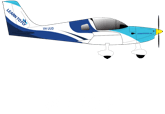
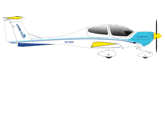
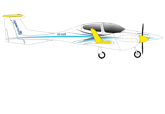
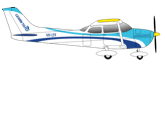
Most beginners train in common single-engine training aircraft. The exact aircraft depends on the school.
Do not worry too much about brand names at the start. Instead, ask whether the aircraft is suitable for your licence goal, available consistently, maintained well, and supported by instructors who know it deeply.
A modern aircraft may have digital avionics. An older training aircraft may use traditional instruments. Both can be useful. What matters most is that you learn the fundamentals and understand what the instruments are telling you.
Common Mistakes New Student Pilots Make
Avoiding common mistakes can make your pathway smoother.
Mistake 1: Chasing Minimum Hours Only
Minimum hours matter, but competence matters more. If you need extra time to become safe and confident, that is normal.
Mistake 2: Flying Too Infrequently
Long gaps can make training less efficient. Try to create a rhythm you can maintain.
Mistake 3: Delaying Theory Study
Theory supports practical flying. Start early and study steadily.
Mistake 4: Ignoring Medical Requirements
If you want a professional pathway, check medical requirements before investing heavily.
Mistake 5: Choosing Only by Hourly Price
A low hourly rate can be attractive. However, poor availability, inconsistent instruction, or weak briefing support can increase total cost.
Mistake 6: Not Asking About the Full Pathway
If you want to become a pilot for a career, ask how the school supports students beyond the first licence.
People Also Ask
How do I become a pilot in Australia?
To become a pilot in Australia, choose a licence goal, train with an approved flying school, meet medical and English requirements, pass theory exams, complete flight training, and pass a flight test. The right pathway depends on whether you want recreational, private, or commercial flying.
How long does it take to become a pilot in Australia?
It depends on your schedule, weather, aircraft availability, finances, and learning pace. A PPL may take months for regular part-time students, while full-time commercial pathways can be more intensive.
Is it hard to become a pilot?
It is challenging, but it is manageable with consistent training and good instruction. Most students find that preparation, regular flying, and early theory study make the process much easier.
What licence do I need to fly for fun?
For local recreational flying, an RPL may be suitable. For broader private flying and navigation, a PPL is often the better goal.
What licence do I need to fly for work?
You usually need a CPL to fly for work within the privileges of that licence. Many commercial roles also require extra ratings, experience, and operator-specific training.
Expert Q&A
1. Should I do a trial flight before enrolling?
Yes. A trial introductory flight is a smart first step because it lets you experience the aircraft, instructor style, airport environment, and basic controls before committing to a course. It also helps you confirm whether flying feels like the right goal.
2. Can I work while learning to fly?
Yes, many students train part-time while working. However, you should protect regular lesson times and study time, because long gaps can slow progress and increase revision needs.
3. Do I need strong maths to become a pilot?
You need practical maths, not advanced university maths for the early stages. You will use calculations for fuel, time, distance, weight, balance, performance, and navigation, but these skills are taught step by step.
4. Can international students train as pilots in Australia?
Yes, international students may be able to train in Australia, but visa, study, English, medical, and licensing details must be checked carefully. Treat these as administrative requirements and get guidance from the school, CASA, and licensed migration professionals where relevant.
5. What makes a good student pilot?
A good student pilot is prepared, consistent, honest about mistakes, open to feedback, and safety-focused. Natural talent helps, but discipline and attitude matter more over the full journey.
Conclusion
To become a pilot in Australia, start with a clear goal, choose the right licence pathway, confirm your medical requirements, train consistently, and study the theory as part of real-world flying. The process takes effort, but each stage builds skill, judgement, and confidence.
If your goal is recreational flying, a structured RPL or PPL pathway may be the right fit. However, if your goal is a professional career, plan early for CPL training, medical requirements, ratings, and long-term experience building.
Most importantly, choose a school that explains the journey clearly and supports safe progress. To explore training options and take your next step, visit Learn To Fly Melbourne’s pilot training pathways.