


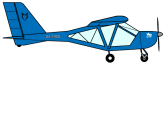


If you are searching for a clear path to becoming a cpl pilot in Australia, it helps to understand that earning a Commercial Pilot Licence involves much more than reaching a minimum number of flight hours. You must develop professional flying skills, pass several theory examinations, meet medical and English standards, complete approved training and demonstrate sound judgement during a flight test.
In practical flight training, students often focus first on how quickly they can finish. However, the stronger question is whether the training will prepare them to operate safely, consistently and professionally. A commercial pilot is expected to plan carefully, manage risk, communicate clearly and make reliable decisions even when conditions change.
What Is a CPL Pilot?
A CPL pilot is a person who holds a Commercial Pilot Licence and may be paid to fly within the privileges, ratings and operating rules attached to that licence. In Australia, CASA issues the licence after approved training, theory exams, required flight experience, English proficiency and a successful flight test.

Table of Contents
- What does CPL pilot mean in Australia?
- What can a CPL pilot do?
- CASA requirements for a CPL
- Integrated and non-integrated training
- CPL pilot flight-hour requirements
- Theory examinations
- English language requirements
- Medical and security requirements
- Step-by-step CPL pilot checklist
- Skills developed during commercial training
- Training duration and cost planning
- Choosing a flight training provider
- Career options after receiving a CPL
- Ratings and endorsements after a CPL
- Common CPL training mistakes
- People Also Ask
- CPL pilot Q&A
- Conclusion
What Does CPL Pilot Mean in Australia?
CPL stands for Commercial Pilot Licence. In Australia, pilot licensing is administered by the Civil Aviation Safety Authority, commonly known as CASA.
Holding a CPL means you may exercise commercial flying privileges, subject to the aircraft category, ratings, endorsements, medical certificate, operational rules and recent-experience requirements that apply to the flight.
Therefore, a CPL is not a universal authorisation to fly every aircraft in every commercial operation. For example, a newly qualified aeroplane CPL holder cannot automatically fly a multi-engine aircraft in instrument conditions. The pilot would need the appropriate aircraft rating, instrument rating, endorsements, medical certification and operator training.
Similarly, having a CPL does not guarantee employment. It establishes a professional licensing foundation. Employers may still require additional flight experience, operational knowledge, aircraft-specific training and evidence of good decision-making.
CASA states that a CPL allows a person to fly in private and commercial operations under Part 61 of the Civil Aviation Safety Regulations. CASA also identifies specific restrictions relating to multi-crew air transport operations and certain heavier aircraft. You can review the current CASA commercial pilot licence requirements before planning your training.
What Can a CPL Pilot Do?
A qualified CPL pilot may be paid for authorised flying work. However, the exact work available depends on the pilot’s category rating, qualifications, experience and the operator’s requirements.
Potential commercial pathways may include:
- Charter operations
- Scenic flights
- Freight operations
- Survey flying
- Aerial photography
- Agricultural operations
- Parachuting operations
- Flight instruction after gaining an instructor rating
- Regional aviation
- Corporate aviation
- Airline pathways after further qualifications and experience
CASA’s published privileges allow a CPL holder to act as pilot in command in many operations. However, a CPL holder cannot act as pilot in command of a multi-crew aircraft in an air transport operation based on the CPL alone.
Additional experience restrictions also apply to certain single-pilot aeroplanes and rotorcraft above specified maximum take-off weights. CASA states that a CPL holder may act as co-pilot in any operation, provided all other applicable qualifications and operational requirements are met.
A Licence Is Only One Part of Commercial Readiness
Commercial operations require more than a plastic licence or digital record. A working pilot may also need:
- A current medical certificate
- A valid aircraft class or type rating
- Relevant design feature endorsements
- A current flight review
- Instrument or night qualifications
- Operator induction and checking
- Route or aerodrome knowledge
- Multi-crew cooperation training
- Recent take-off and landing experience
- Security identification
- An acceptable employment and safety record
Therefore, students should avoid viewing the CPL flight test as the end of their development. Instead, it is the point at which professional development becomes more specialised.
CASA Requirements for a CPL Pilot
According to CASA, an applicant for a Commercial Pilot Licence must:
- Be at least 18 years old
- Meet the applicable English language standard
- Complete the required theory examinations
- Train with a Part 141 or Part 142 flight training operator
- Receive a recommendation for the flight test
- Meet the minimum aeronautical experience requirements
- Pass the CPL flight test
- Meet the applicable medical requirements
- Complete an aviation security status check
- Apply to CASA for the licence
These are minimum licensing conditions. A student may need additional training before reaching the required flight-test standard.
That distinction is important. Minimum hours determine when you may become eligible. Competency determines when you are genuinely ready.
CASA does not list holding a Private Pilot Licence as a universal prerequisite for obtaining a CPL. Some non-integrated students gain a PPL as an intermediate milestone, while an integrated commercial course may take an ab initio student from little or no experience through a structured CPL program.
Part 141 and Part 142 Explained
Part 141 and Part 142 refer to sections of Australia’s civil aviation regulations governing flight training organisations.
A Part 141 operator may conduct certain non-integrated flight training courses. These courses can offer greater flexibility because students may progress through separate training stages.
A Part 142 operator may conduct integrated training. An integrated CPL course combines theory and practical training within an approved, structured syllabus.
These labels describe regulatory approvals. They do not, by themselves, prove that one school has better instructors, newer aircraft or stronger employment outcomes than another.
Integrated vs Non-Integrated CPL Pilot Training
Australian students generally follow an integrated or non-integrated pathway.
| Training factor | Integrated CPL course | Non-integrated CPL course |
| Regulatory framework | Normally conducted by a Part 142 operator | Normally conducted by a Part 141 operator |
| Minimum aeronautical experience for aeroplane CPL | 150 hours | 200 hours |
| Course structure | Theory and flying follow an approved, coordinated syllabus | Training may be completed in separate stages |
| Typical study pattern | Often intensive and full-time | Often more flexible |
| Suitable for | Students seeking a structured career pathway | Students balancing work, family or other commitments |
| Training continuity | Usually high when undertaken full-time | May vary with availability and funding |
| Flexibility to change pace | Usually lower | Usually higher |
| Main planning risk | Falling behind an intensive schedule | Losing proficiency during long gaps |
| Potential advantage | Lower regulatory minimum and coordinated learning | Greater control over timing and expenditure |
| Important limitation | 150 hours is a minimum, not a guaranteed completion total | 200 hours is a minimum, not proof of professional readiness |
CASA currently specifies a minimum of 150 hours of aeronautical experience for an integrated aeroplane CPL course and 200 hours for a non-integrated course. The two pathways also have different pilot-in-command requirements.
Which CPL Pilot Pathway Is Better?
Neither pathway is automatically better for every student.
An integrated course may suit someone who can train consistently, study full-time and follow a fixed program. Because theory and flight training are coordinated, students can apply classroom knowledge during practical lessons.
In contrast, non-integrated training may suit someone who needs to study around work or family commitments. It can also allow a student to complete training in stages, such as recreational, private and commercial milestones.
However, frequent breaks can increase the number of revision flights needed. Therefore, a flexible program is not always the cheaper option.
From a training-planning perspective, continuity often matters more than speed. Flying regularly helps students retain procedures, aircraft handling skills and situational awareness.
CPL Pilot Flight-Hour Requirements
For an aeroplane CPL, CASA publishes minimum experience requirements for integrated and non-integrated students.
Integrated Aeroplane CPL Requirements
An integrated aeroplane course requires at least:
- 150 hours of aeronautical experience
- 140 hours of flight time as a pilot
- 70 hours as pilot in command
- 20 hours of pilot-in-command cross-country time
- 10 hours of dual instrument time
- Five hours of dual instrument flight time in an aeroplane
Non-Integrated Aeroplane CPL Requirements
A non-integrated aeroplane course generally requires at least:
- 200 hours of aeronautical experience
- 190 hours of flight time as a pilot
- 100 hours as pilot in command
- 20 hours of pilot-in-command cross-country time
- 10 hours of dual instrument time
- Five hours of dual instrument flight time in an aeroplane
The pilot-in-command requirement may differ for applicants who already hold certain helicopter licences.
For either pathway, the cross-country requirement must include an aeroplane flight of at least 300 nautical miles. The flight must include full-stop landings at two aerodromes outside the flight training area.
CASA also allows up to 10 hours of the total aeronautical experience to be completed in an approved flight simulation training device.
Why Pilot-in-Command Hours Matter
Pilot-in-command, or PIC, time is not simply a logbook target. It gives the student responsibility for the conduct and safety of the flight.
During supervised and authorised solo flying, the student must make decisions concerning:
- Weather suitability
- Fuel requirements
- Aircraft serviceability
- Airspace
- Navigation
- Diversions
- Passenger or loading limitations
- Aerodrome conditions
- Personal fitness
- Threat and error management
Consequently, useful PIC time should develop judgement rather than merely increase a total.
Why Cross-Country Training Is Important
Cross-country flights expose a future cpl pilot to changing conditions beyond the familiar local training area.
A student may need to manage:
- Different runway layouts
- Unfamiliar radio procedures
- Controlled and non-controlled airspace
- Weather changes across a route
- Fuel planning
- Air traffic delays
- Diversions
- Navigation uncertainty
- Terrain and operational hazards
Therefore, cross-country training is one of the most important stages in developing independent decision-making.
Minimum Hours Versus Actual Completion Hours
Students should budget around competency rather than assuming they will finish at the exact regulatory minimum.
Additional hours may be required because of:
- Weather disruptions
- Changes between instructors
- Aircraft availability
- Long gaps between lessons
- Repeated examination preparation
- Difficulty with navigation or radio work
- Additional flight-test preparation
- The need to repeat particular exercises
This does not necessarily mean the training has failed. Additional instruction can be a responsible response when a student has not yet reached the required standard.
CPL Pilot Theory Examinations
An aeroplane CPL applicant must complete seven theory examinations.
The subjects cover:
- Flight rules and air law
- Aerodynamics
- Aircraft general knowledge
- Human factors
- Meteorology
- Navigation
- Operations, performance and flight planning
CASA states that the seven aeroplane CPL examinations include three common subjects and four aeroplane-specific subjects. Candidates may sit the exams in any order.
However, all seven subjects must be passed within a single examination window. The current window is two years, beginning on the date of the first CPL subject pass.
Students should verify exam fees, permitted materials, time limits and pass marks before every booking because these details can change. Current information is available through the CASA CPL aeroplane examination guidance.
Why CPL Theory Is More Than Exam Preparation
A cpl pilot uses theory to make operational decisions.
For example:
- Meteorology helps determine whether a route remains safe.
- Performance knowledge confirms whether an aircraft can take off and land within the available distance.
- Human factors knowledge helps identify fatigue, pressure and cognitive bias.
- Navigation knowledge supports accurate fuel and diversion planning.
- Air law knowledge defines what operations are permitted.
- Aerodynamics supports safer aircraft handling near performance limits.
Therefore, memorising practice questions without understanding the subject may create gaps that become visible during flight training or employment.
A Practical Theory Study Strategy
Students can improve retention by linking theory to real flights.
For instance, before a navigation exercise, review:
- The forecast and actual weather
- Aircraft loading
- Take-off performance
- Fuel calculations
- Airspace requirements
- Alternates
- Relevant operational rules
After the flight, compare the plan with what occurred. This process turns theory into working knowledge.
English Requirements for a CPL Pilot
Pilots who use aeronautical radio must meet Aviation English Language Proficiency requirements.
CASA assesses six areas:
- Pronunciation
- Structure
- Vocabulary
- Fluency
- Comprehension
- Interaction
The overall result is based on the lowest score received across these areas.
CASA currently requires at least Level 4. Level 4 must generally be reassessed every three years, while Level 5 must be reassessed every six years. Level 6 has no expiry under the published framework.
Students can review the CASA Aviation English Language Proficiency guidance for current assessment arrangements.
Aviation English Is Not About Accent
A pilot does not need to sound like a particular nationality. Instead, the pilot must communicate clearly and understand operational information.
This includes the ability to:
- Use standard radio phraseology
- Understand clearances and instructions
- Recognise misunderstandings
- Request clarification
- Explain abnormal situations
- Communicate effectively when standard phrases are insufficient
Clear communication becomes especially important in busy controlled airspace or during unexpected events.
Medical Requirements for a CPL Pilot
Medical eligibility should be investigated early, preferably before committing to a major training expense.
CASA’s current published guidance states that a Class 1 medical certificate is required to attempt the CPL flight test.
CASA also currently states that a CPL holder may use either a Class 1 or qualifying Class 2 medical certificate when flying. However, commercial privileges exercised under a Class 2 certificate are restricted. The aircraft must be under 8,618 kilograms maximum take-off weight, and no passengers may be carried.
A Class 2 certificate may also be used when the CPL holder is conducting a private operation. These provisions are subject to current exemptions and regulatory conditions, so students and pilots should always confirm the latest CASA position before relying on them.
Why You Should Arrange a Medical Early
A medical assessment can reveal whether further reports, specialist examinations or monitoring are required.
Completing the process early may help prevent a situation in which a student has already paid for substantial training but later discovers that medical certification will be delayed or restricted.
A medical issue does not automatically mean a person cannot become a pilot. However, aviation medical decisions are individual and safety based. Students should discuss personal circumstances with an authorised aviation medical professional rather than relying on online anecdotes.
This article provides general administrative information, not medical advice.
Security and Administrative Requirements
A flight crew licence applicant must have an aviation security status check.
CASA explains that pilots generally satisfy this requirement by applying for either:
- An Aviation Security Identification Card, known as an ASIC
- An Aviation Identification, known as an AVID
An ASIC is generally required for flight crew operating at security-controlled airports. An AVID is more restrictive and cannot be used for access at security-controlled airports.
CASA currently advises that AVID applications often take four to six weeks to process. Therefore, this step should not be left until the final days before a licence application.
Administrative requirements may change. Students should confirm current identification, security, medical and application requirements with CASA and their approved training provider.
Numbered Checklist: How to Become a CPL Pilot
Use this checklist as a planning framework.
- Clarify your career objective
Decide whether you are aiming for charter, instruction, regional aviation, airlines or another commercial pathway. - Complete an introductory flight
Use the experience to assess your comfort, interest and communication with the school. - Obtain an Aviation Reference Number
An ARN is used in your dealings with CASA. - Investigate medical eligibility
Arrange the appropriate aviation medical assessment early. - Compare approved training pathways
Review integrated Part 142 and non-integrated Part 141 options. - Request an itemised training proposal
Confirm what is included, what is excluded and which costs may change. - Create a realistic funding plan
Include flight training, theory, exams, medicals, equipment, accommodation and possible additional hours. - Begin theory and practical training
Coordinate study with flight lessons wherever possible. - Complete Aviation English requirements
Make sure your assessment remains valid when you need to exercise licence privileges. - Pass all required theory examinations
Track the two-year examination window from your first subject pass. - Complete the required flight experience
Monitor total time, PIC time, cross-country time and instrument training. - Prepare for the CPL flight test
Complete mock tests, oral preparation and scenario-based planning. - Pass the flight test
Demonstrate the required practical standards to an authorised flight examiner. - Complete the security status process
Obtain the appropriate ASIC or AVID arrangement. - Apply to CASA
Submit the licence application and supporting records through the applicable process. - Plan your next qualification
Consider instrument, multi-engine, instructor or other career-relevant training.
Skills a CPL Pilot Develops During Training
Commercial training should refine several connected skills.
Accurate Aircraft Handling
A cpl pilot is expected to control the aircraft within tighter tolerances than an early-stage student. However, accuracy should not come at the expense of situational awareness.
Good handling includes:
- Stable approaches
- Coordinated manoeuvres
- Speed control
- Trim use
- Effective lookout
- Correct configuration
- Timely corrections
Threat and Error Management
Threat and error management involves identifying hazards before they develop into unsafe situations.
Threats may include:
- Deteriorating weather
- High workload
- Time pressure
- Runway contamination
- Traffic congestion
- Fatigue
- Unfamiliar aerodromes
- Aircraft defects
A professional response involves recognising the threat, applying controls and monitoring whether those controls remain effective.
Decision-Making
Commercial pilots may face pressure to complete a flight. Therefore, training must build the confidence to delay, divert or cancel when appropriate.
A safe decision may disappoint a customer or employer in the short term. Nevertheless, protecting the aircraft and its occupants is the priority.
Workload Management
A pilot must continue flying the aircraft while handling radio calls, navigation, checklists, weather and abnormal situations.
Students therefore learn to:
- Prioritise tasks
- Use checklists effectively
- Prepare early
- Avoid unnecessary distractions
- Ask for assistance
- Reduce workload before it becomes excessive
Professional Communication
Professional communication includes more than radio technique.
It also involves:
- Giving clear briefings
- Reporting defects accurately
- Communicating limitations
- Asking relevant questions
- Listening to operational staff
- Recording information correctly
- Accepting constructive feedback
How Long Does CPL Pilot Training Take?
There is no single completion time that applies to every student.
An intensive integrated program may progress faster because students fly and study frequently. However, completion can still be affected by weather, aircraft maintenance, instructor availability, examination timing and individual progress.
A non-integrated student may take longer because training is completed in stages. Nevertheless, the pathway may be more practical for someone who is working or managing other responsibilities.
Factors affecting duration include:
- Lesson frequency
- Weather conditions
- Training location
- Aircraft availability
- Instructor continuity
- Theory study time
- Examination bookings
- Medical processing
- Security checks
- Personal learning pace
- Availability of funds
- Flight-test scheduling
Students should be cautious about completion-time promises that do not explain these variables.
How Much Does CPL Pilot Training Cost?
CPL training costs vary significantly between Australian providers. Therefore, any quoted total should be treated as an estimate unless the inclusions, assumptions and possible variations are clearly stated.
Major cost components may include:
- Aircraft hire
- Instructor fees
- Simulator sessions
- Theory tuition
- Examination fees
- Flight-test fees
- CASA charges
- Medical assessments
- Security identification
- Aviation headset
- Textbooks and charts
- Electronic flight planning subscriptions
- Uniforms
- Accommodation
- Transport
- Additional competency training
Questions to Ask About a CPL Quote
Before enrolling, ask:
- Is the quote based on regulatory minimum hours?
- How many students finish at the quoted hours?
- Are fuel levies included?
- Are landing and airways charges included?
- Are briefings charged separately?
- Are theory classes included?
- Are exam and flight-test fees included?
- Which aircraft will be used?
- What happens if an aircraft is unavailable?
- What refund or transfer conditions apply?
- Are additional hours charged at the same rate?
- Does the program include career-relevant ratings?
Do not select a course solely because it advertises the lowest headline price. A lower hourly rate may not provide better value if aircraft access is limited or training continuity is poor.
Choosing a CPL Pilot Training Provider
A professional flight school should be able to explain its training pathway clearly.
Evaluate:
Regulatory Approval
Confirm that the organisation holds the required Part 141 or Part 142 approval for the training being offered.
Instructor Availability
Ask how instructors are assigned and how frequently students can fly.
Frequent instructor changes are not always harmful. Exposure to different teaching styles can be valuable. However, poor communication between instructors may lead to unnecessary repetition.
Aircraft Availability
A large fleet is useful only when aircraft are serviceable and available for the relevant course.
Ask about:
- Booking demand
- Maintenance support
- Replacement aircraft
- Aircraft types
- Simulator access
- Cancellation procedures
Training Environment
Different aerodromes provide different learning experiences.
A busy controlled aerodrome can build radio and traffic-management skills. Meanwhile, a quieter aerodrome may allow more time for practical exercises.
The right environment depends on the course structure and how training is managed.
Student Support
Ask how the school supports students who fall behind in theory or flying.
Useful support may include:
- Progress reviews
- Instructor briefings
- Study sessions
- Mock examinations
- Flight-test preparation
- Welfare support
- Career guidance
Transparency
The provider should explain costs, likely risks and limitations without guaranteeing employment or an exact completion date.
Career Options After Becoming a CPL Pilot
A newly qualified cpl pilot may not move directly into an airline cockpit.
Early commercial roles can help pilots develop operational experience, but entry requirements vary. Employers may consider:
- Total flight time
- Pilot-in-command experience
- Multi-engine time
- Instrument experience
- Aircraft type familiarity
- Safety record
- Communication
- Professional conduct
- Geographic flexibility
- References
- Right to work
- Performance during interviews and simulator assessments
Some pilots gain additional qualifications immediately after the CPL. Others build experience before completing the next rating.
Flight Instruction
A pilot who completes an instructor rating and the applicable training endorsements may work in flight training.
Instruction can develop:
- Communication
- Technical knowledge
- Situational awareness
- Responsibility
- Standard operating discipline
However, instruction should not be treated merely as an hour-building shortcut. Instructors are responsible for developing safe future pilots.
Charter and Regional Operations
Charter and regional work may involve demanding weather, remote aerodromes, changing schedules and customer service.
Operators may require additional experience beyond the CPL minimum.
Survey and Aerial Work
Survey, photography and other aerial work may require specialised operational training or endorsements. The work can involve precise flying and long periods of high concentration.
Airline Pathways
An airline pathway usually requires qualifications and experience beyond a basic CPL.
Depending on the role, these may include:
- Multi-engine class rating
- Instrument rating
- Air Transport Pilot Licence theory credits
- Multi-crew cooperation training
- Instrument proficiency
- Additional flight experience
- Airline-specific selection and training
A CPL should therefore be viewed as one stage in a longer professional pathway.
Ratings and Endorsements After a CPL
The best next qualification depends on the intended job.
Multi-Engine Class Rating
This rating allows a pilot to operate applicable multi-engine aeroplanes. Multi-engine aircraft introduce new performance, systems and asymmetric-flight considerations.
Instrument Rating
An instrument rating permits qualified pilots to operate under the Instrument Flight Rules within the privileges of the rating.
It develops skills in:
- Instrument procedures
- Navigation aids
- Weather interpretation
- Approach planning
- Departure procedures
- En-route operations
- Abnormal procedures
Flight Instructor Rating
An instructor rating is required before providing authorised flight instruction. Additional training endorsements determine which activities the instructor may teach.
Night VFR Rating
A Night Visual Flight Rules rating allows eligible pilots to conduct applicable visual operations at night.
Other Endorsements
Depending on the work, a pilot may later pursue endorsements or ratings involving:
- Tailwheel aircraft
- Retractable undercarriage
- Manual propeller pitch control
- Pressurisation
- Aerobatics
- Low-level operations
- Formation flying
- Aerial application
- Type-rated aircraft
Not every qualification improves every career path. Students should avoid purchasing ratings without understanding how they support a realistic employment objective.
Common CPL Pilot Training Mistakes
1. Delaying the Medical
Waiting until late in the course can create avoidable financial and scheduling risks.
2. Flying Too Infrequently
Long gaps can reduce retention and lead to repeated revision lessons.
3. Treating Theory as a Separate Task
Theory becomes more useful when it is applied during planning and flying.
4. Chasing Minimum Hours
Reaching the minimum is not the same as meeting the professional standard.
5. Ignoring Logbook Accuracy
Incorrect or incomplete records can delay flight-test eligibility or a licence application.
6. Choosing a School Only by Price
Aircraft access, instructor quality and training continuity can affect the final cost.
7. Expecting Immediate Airline Employment
The CPL is an important qualification, but most professional pathways require additional experience and training.
8. Avoiding Difficult Weather Decisions
Students sometimes feel that cancelling a flight is a failure. In reality, deciding not to fly can demonstrate strong judgement.
9. Focusing Only on Aircraft Handling
Commercial competence also includes planning, communication, leadership, risk management and professionalism.
10. Rushing Flight-Test Preparation
A flight test evaluates integrated performance. Therefore, isolated manoeuvre practice is not enough.
People Also Ask About Becoming a CPL Pilot
How many hours do you need to become a CPL pilot in Australia?
An integrated aeroplane CPL course requires at least 150 hours of aeronautical experience, while a non-integrated course generally requires at least 200 hours. Students may require additional hours to reach the flight-test standard.
Do you need a PPL before starting CPL training?
CASA does not list a PPL as a universal prerequisite for obtaining a CPL. A non-integrated student may gain a PPL during staged training, while an integrated course may take a student through a structured commercial program.
Can a CPL pilot work for an airline?
A CPL can support an airline career pathway, but it does not qualify a person for every airline position. Airlines may require additional instrument, multi-engine, multi-crew, theory and experience standards.
Is a Class 1 medical required for a CPL pilot?
CASA currently requires a Class 1 medical to attempt the CPL flight test. Limited use of a Class 2 medical may be available after licensing under specific conditions, including restrictions on aircraft weight and passenger carriage.
Is CPL training difficult?
CPL training is demanding because it combines theory, aircraft handling, navigation, communication and decision-making. Consistent study and regular flying generally make the workload more manageable.
CPL Pilot Q&A
1. Does an Australian CPL expire?
The licence should not be confused with the ongoing requirements needed to exercise its privileges. A pilot must maintain the applicable medical, ratings, flight reviews, proficiency checks and recent experience required for the intended operation.
2. Can CPL training hours be completed in a simulator?
CASA permits up to 10 hours of the aeronautical experience requirement for an aeroplane CPL to be completed in an approved flight simulation training device. However, important minimum flight-time and aeroplane-flight requirements still apply.
3. What is assessed during a CPL flight test?
The test evaluates whether the applicant meets the practical standards specified for the licence. Assessment may include preparation, aircraft operation, navigation, procedural knowledge, threat and error management, communication and decision-making.
4. Should a student complete CPL or ATPL theory first?
The right sequence depends on the training program and career plan. CPL theory directly supports commercial licence training, while ATPL theory may be relevant to longer-term airline goals. Students should discuss sequencing, validity rules and prerequisites with their training provider before enrolling.
5. What makes a strong entry-level commercial pilot?
Employers generally value safe judgement, accurate flying, preparation, communication and professional behaviour. A pilot who acknowledges limitations and follows procedures may be more employable than someone who has more hours but weaker discipline.
Conclusion: Planning Your CPL Pilot Journey
Becoming a cpl pilot in Australia requires structured training, theory knowledge, medical fitness, English proficiency, documented flight experience and a successful flight test. More importantly, it requires the development of professional judgement.
Start by confirming your medical position, comparing approved training pathways and requesting a transparent cost breakdown. Then create a schedule that supports regular flying and consistent theory study.
Remember that the regulatory minimum is an eligibility threshold, not a promise of completion or employment. Good commercial training should prepare you to manage real operational risks, communicate clearly and make safe decisions without unnecessary pressure.
To explore structured Australian flight training options and plan your next step, visit Learn to Fly’s professional pilot training information.