



If you are searching for pilot training in Melbourne, you are probably comparing flight schools, licence pathways, aircraft, costs, schedules and career options at the same time. That can feel exciting, but also confusing. Melbourne is a strong place to start because students can train in real Australian weather, busy radio environments, controlled airspace procedures and varied Victorian flying conditions. However, the best pathway depends on your goal: recreational flying, private flying, commercial aviation, airline preparation or international licence conversion.
This guide explains the main choices in plain English. It also uses Australian aviation terms, so you can ask better questions before you enrol.
Table of Contents
- What pilot training Melbourne means
- Why train in Melbourne, Australia?
- Main licence pathways for pilot training Melbourne
- RPL, PPL and CPL explained
- Integrated vs non-integrated flight training
- Medical, English and admin requirements
- Onshore Melbourne training vs offshore training
- How to choose a Melbourne flight school
- Pilot training Melbourne onboarding checklist
- Common training mistakes to avoid
- People Also Ask
- Expert Q&A
- Conclusion
What Is Pilot Training Melbourne?
Pilot training Melbourne is flight and ground training delivered in or around Melbourne, Victoria, to help students work towards CASA-recognised Australian pilot licences such as RPL, PPL or CPL. It usually combines aircraft lessons, simulator practice, theory subjects, exams, medical checks, English requirements and flight tests.
Why Pilot Training Melbourne Is a Smart Starting Point
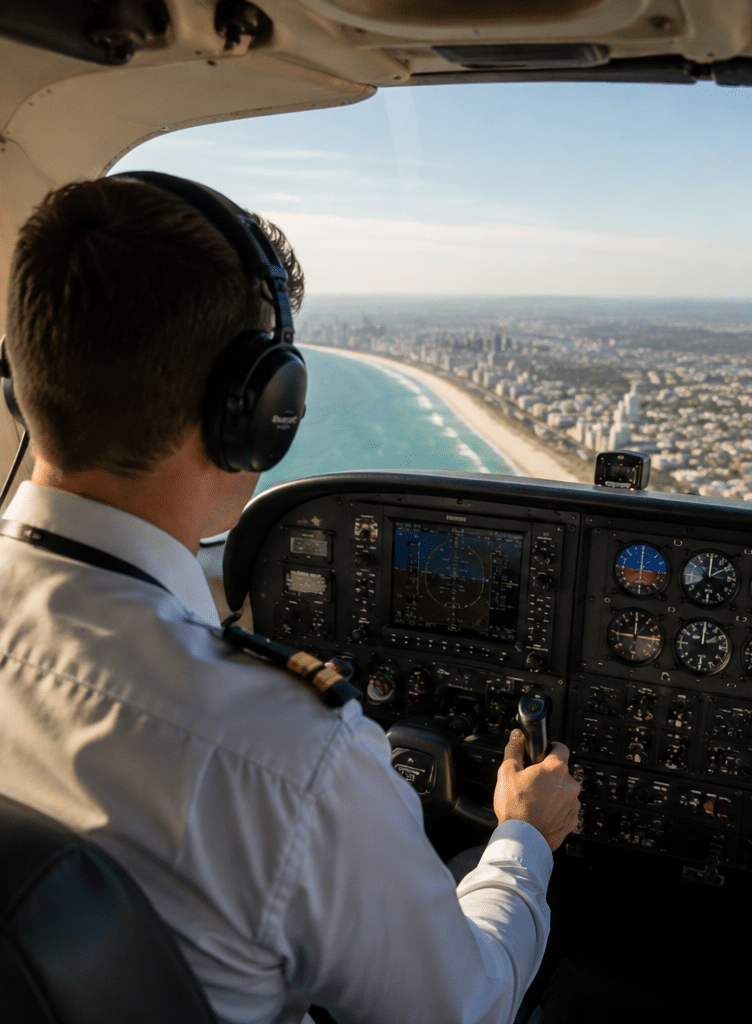
Pilot training Melbourne gives students access to a realistic Australian aviation environment. Instead of learning only in quiet skies, you may practise radio calls, circuit discipline, weather decisions and navigation planning in conditions that reflect day-to-day general aviation.
That matters because flying is not just aircraft handling. It is decision-making. For example, you must learn when to continue, delay, divert or cancel a flight. Melbourne’s changeable weather can teach that lesson early, which is helpful for safe pilots.
In practice, students who progress well usually do three things. First, they understand the licence pathway before they start. Second, they keep theory moving alongside flying. Finally, they budget for revision flights, exam attempts, medical timing and weather delays.
In Australia, pilot licensing sits under the Civil Aviation Safety Authority, commonly called CASA. CASA lists recreational, private, commercial and air transport pilot licences, as well as aviation medicals, English language standards and pilot exams, so students should use official CASA pages when checking requirements. CASA pilot licences are the best starting point for understanding the licence ladder.
Pilot Training Melbourne Pathways: Start With Your Goal
Before choosing a school, define your end goal. This one decision affects your course type, medical certificate, timetable, aircraft choice and total budget.
If you want to fly for enjoyment, you may start with a Recreational Pilot Licence, often called an RPL. If you want to carry passengers privately, fly longer cross-country trips and build broader skills, a Private Pilot Licence, or PPL, may suit you. However, if you want aviation as a career, you will usually plan towards a Commercial Pilot Licence, or CPL.
The key point is that pilot training Melbourne is not one single course. It is a pathway. Therefore, a good school should ask why you want to fly before recommending a training plan.
Recreational Pilot Licence
An RPL is often the first milestone for local students. It can suit people who want to fly smaller aircraft in local areas before expanding privileges with endorsements.
For many beginners, an RPL helps build confidence. You learn core aircraft handling, circuits, take-offs, landings, emergency procedures and basic navigation thinking. However, it is not the same as a full private or commercial licence.
Private Pilot Licence
A PPL is a popular option for students who want more freedom. It can support private travel, family flying and more advanced navigation. It also gives you a stronger foundation if you later decide to move towards commercial training.
A PPL requires both theory and flight training. You should expect to learn meteorology, navigation, aircraft performance, air law, human factors and operational decision-making. As a result, the PPL is not only about “getting more hours”; it is about becoming a safer pilot in more varied situations.
Commercial Pilot Licence
A CPL is the usual target for students who want to be paid to fly. It is more demanding because commercial pilots must demonstrate higher standards of accuracy, planning, workload management and judgement.
CASA explains that aeroplane CPL experience requirements differ between integrated and non-integrated training. For aeroplanes, CASA lists 150 hours of aeronautical experience for an integrated CPL course and 200 hours for a non-integrated CPL course, with detailed conditions for pilot-in-command, cross-country and instrument time.
That difference is important. A shorter minimum hour requirement does not automatically mean a lower total cost or a better outcome. Instead, compare structure, timetable, aircraft access, instructor continuity and your personal learning style.
RPL, PPL and CPL in Plain English
Here is a simple way to think about the main stages of pilot training in Melbourne.
| Licence or stage | Best for | Typical learning focus | Important note |
| Trial introductory flight | First-time students | Basic controls, school fit, instructor style | Not a licence, but useful before committing |
| RPL | Local recreational flying | Handling, circuits, local-area operations | Can be a stepping stone |
| PPL | Private travel and broader flying | Navigation, passengers, cross-country planning | Strong foundation for later CPL |
| CPL | Career flying | Commercial accuracy, advanced planning, higher standards | Requires serious theory and time commitment |
| Ratings and endorsements | Skill expansion | Instrument, instructor, multi-engine or other privileges | Added after core licence stages |
This table is simplified, but it helps you avoid a common mistake: enrolling in the wrong course because it sounds cheaper or faster. Instead, match the course to your flying goal.
For example, a future airline student should think differently from someone who wants weekend flying around Victoria. Both may begin in a similar aircraft, but their training plans should not be identical.
Integrated vs Non-Integrated Pilot Training in Melbourne
One of the biggest choices is integrated versus non-integrated training.
Integrated training combines ground theory and flight training in a structured program. It is usually more intensive. CASA notes that in an integrated CPL course, students complete ground theory with practical flight training at the same time, while non-integrated training involves more practical flight training and takes longer.
Non-integrated training can suit students who need flexibility. For example, you may be working full-time, studying part-time or balancing family commitments. However, slower training can sometimes increase revision needs, especially if long gaps appear between flights.
Which Is Better?
Neither pathway is automatically better. Instead, the right choice depends on your timetable, budget, learning style and career deadline.
Integrated pilot training Melbourne may suit students who want a structured timetable and can commit to regular study. Non-integrated training may suit students who want to pay progressively and learn around work.
However, consistency matters in both. Flying once every few weeks can slow progress because each lesson may start with revision. Therefore, even flexible students should aim for regular lessons where possible.
CASA, Part 141 and Part 142: What Students Need to Know
Australian flight training is regulated. That is good for students because training organisations must operate within recognised aviation rules and approvals.
CASA explains that flight training organisations need approval to conduct most flight training activities, and those approvals can include Part 141 certificates, Part 142 approvals, an Air Operator’s Certificate with a Part 142 authorisation, or a combination. Part 141 generally covers non-integrated RPL, PPL and CPL training, while Part 142 covers integrated and multi-crew training activities.
For non-experts, this can sound technical. In simple terms, these approvals relate to what kind of training an organisation is authorised to deliver. When comparing schools, ask what approvals apply to the course you want, not just whether the school “does flight training”.
This is an administrative and safety question, not legal advice. If you need visa, migration or qualification-recognition guidance, use official government sources and qualified advisers.
Medical Requirements for Pilot Training in Melbourne
Medical planning should happen early. Do not leave it until you are close to solo flying.
CASA states that student pilots learning to fly must have a Class 2 or Basic Class 2 medical certificate before they can fly solo. CASA also states that a Class 2 medical certificate is required to exercise RPL and PPL privileges, while private and recreational pilots may be able to use Basic Class 2 for some operations. CASA aviation medical certificate guidance explains the certificate classes and validity periods.
Basic Class 2 can be attractive because the process may be simpler. However, CASA notes that Basic Class 2 has restrictions, including private day VFR operations, below 10,000 feet, piston-engine aircraft, maximum five passengers and no use of operational ratings such as instructor or instrument ratings.
Therefore, career-minded students should ask the school which medical pathway best fits their long-term plan. If you aim for CPL or airline training, medical timing is especially important.
Aviation English Requirements
Clear English matters in aviation because pilots use radio calls, standard phraseology and time-critical instructions.
CASA says pilots must meet English language requirements to use an aeronautical radio, and Aviation English Language Proficiency assesses verbal English and aviation terminology. CASA also lists AELP as required for licences including PPL, CPL and ATPL.
For international students, this is not just a paperwork item. It affects safety and confidence. During pilot training Melbourne, you will hear fast radio calls, local place names, taxi instructions, circuit sequencing and weather information. Therefore, build aviation listening practice into your preparation.
International Students and CRICOS
International students should check course eligibility carefully. Australia’s international education system has specific registration rules.
Study Australia explains that education and training providers must be registered on CRICOS to deliver education services to international students on a student visa. It also notes that CRICOS-registered providers must meet ESOS Act and National Code requirements. Study Australia education governance guidance is a useful official source for understanding this system.
If you are applying from overseas, ask whether the course is suitable for your visa circumstances. Also ask what support is available for enrolment documents, health cover, orientation, accommodation and arrival planning. This is administrative guidance only, not migration advice.
Melbourne Weather, Airspace and Real-World Training Value
One reason students search for pilot training Melbourne is the real-world training environment. Victoria can offer varied weather, coastal influences, changing winds and busy airspace procedures. As a result, students can learn practical judgement, not just textbook answers.
Weather delays can be frustrating. However, they are part of aviation. A cancelled lesson can still become a useful ground session if the school uses the time well.
For example, you can review weather forecasts, NOTAMs, weight and balance, fuel planning, radio procedures or exam topics. Airservices Australia explains that NAIPS processes and stores meteorological and NOTAM information and provides briefing products and services for pilots and Australian air traffic control.
Good training teaches you to respect weather, not fear it. Therefore, ask how your school uses non-flying days productively.
Onshore Pilot Training in Melbourne vs Offshore Training
Some students compare Australia with lower-cost offshore locations. Cost matters, but it should not be the only factor.
| Factor | Onshore Pilot training in Melbourne | Offshore training first |
| Licence alignment | Directly aligned with Australian CASA pathways | May require conversion or extra checks |
| Weather exposure | Real Victorian and Australian operating conditions | Depends on country and region |
| Radio environment | Australian phraseology and local procedures | May differ from Australian operations |
| Support network | Easier for local students and Australian-based career planning | Can be harder if family or work is in Australia |
| Cost control | May look higher upfront, but fewer conversion surprises | May look cheaper, but conversion costs can add up |
| Career relevance | Strong for students wanting Australian aviation familiarity | Useful in some cases, but verify recognition |
| Admin complexity | Local documents and CASA pathway | Possible licence conversion and extra paperwork |
Offshore training can be valid for some students. However, compare the full pathway, not only hourly aircraft rates. You should include conversion requirements, travel, accommodation, medicals, exams, time away from work and the cost of returning to Australian procedures.
For many students, pilot training Melbourne provides clearer alignment with Australian flying from day one.
How to Choose a Pilot Training School in Melbourne
Choosing a flight school is not just about the newest aircraft or the lowest hourly rate. A good school should be transparent, organised and realistic.
Ask how training is scheduled. Ask how often students fly. Ask what happens when a class is canceled due to weather. Ask whether theory is integrated with flying or treated as your problem alone.
Also ask about instructor continuity. Students often progress faster when they fly regularly with instructors who understand their strengths, weaknesses and learning style.
Questions to Ask Before You Enrol
Ask these questions before paying a deposit:
- Which licence pathway fits my goal: RPL, PPL, CPL or another pathway?
- Is the course integrated or non-integrated?
- What CASA approvals apply to this training?
- What aircraft types will I train on?
- How often should I fly each week to progress efficiently?
- What theory subjects should I start first?
- What medical certificate do I need, and when?
- What costs are not included in the advertised estimate?
- How are weather cancellations handled?
- What support is available for exams and flight test preparation?
These questions reveal how the school communicates. If answers are vague, keep asking until the pathway is clear.
Pilot Training in Melbourne – Cost Factors
Flight training costs vary because students learn at different speeds. Any school that promises one guaranteed total should be treated carefully.
Your final cost can be affected by aircraft type, instructor rates, landing fees, theory materials, exam attempts, medicals, headsets, uniforms, accommodation, transport and revision flights. Weather and student availability also matter.
The cheapest hourly aircraft rate is not always the cheapest outcome. For example, poor scheduling can create long gaps. Long gaps can create revision. Revision adds cost.
Therefore, compare value, not only price. A slightly higher hourly rate may be worthwhile if the school offers better structure, reliable aircraft availability and strong instructor support.
Pilot Training Melbourne Onboarding Checklist
Use this numbered checklist before starting your first serious course.
- Define your flying goal. Decide whether you want recreational flying, private travel or a commercial aviation career.
- Book a trial flight. Use it to assess comfort, school culture and instructor communication.
- Choose your pathway. Confirm whether RPL, PPL or CPL is the right first major goal.
- Check medical timing. Start your medical process before solo training becomes urgent.
- Confirm English requirements. Plan aviation English support if needed.
- Review CASA approvals. Ask what approvals apply to your course type.
- Plan theory study. Do not leave exams until your flying gets ahead of your knowledge.
- Build a realistic budget. Include equipment, exams, transport, revision and weather delays.
- Set a weekly schedule. Regular lessons usually produce better retention.
- Track progress. Keep notes after every flight, including weaknesses to revise before the next lesson.
This checklist helps you start with fewer surprises. More importantly, it gives you control over your training.
Common Pilot Training Mistakes
The first mistake is choosing a school only by price. Price matters, but training quality, aircraft access, instructor support and course structure matter too.
The second mistake is delaying theory. Students often enjoy flying more than studying, which is understandable. However, theory supports better decisions in the aircraft.
The third mistake is ignoring medical requirements. A delayed medical can interrupt momentum, especially before the first solo.
The fourth mistake is flying too irregularly. If you train once a month, you may spend too much time relearning. Consistency usually improves confidence and reduces wasted revision.
Finally, some students fail to ask enough questions. Aviation has many acronyms, but you do not need to pretend you understand everything. A good instructor should explain clearly.
People Also Ask About Pilot Training in Melbourne
How long does pilot training in Melbourne take?
It depends on your licence goal, availability, weather and study pace. A recreational or private pathway can be part-time, while commercial training is more structured and demanding. Students who fly consistently usually progress more smoothly than those with long gaps.
Is Melbourne a good place to learn to fly?
Yes, Melbourne can be a strong training location because students experience real Australian weather, radio procedures and varied operating conditions. However, the best result depends on choosing a suitable school, flying regularly and keeping theory on track.
What licence do I need to become a commercial pilot in Australia?
Most career students work towards a Commercial Pilot Licence after building the required skills, theory knowledge and flight experience. CASA’s CPL requirements include minimum aeronautical experience, with different hour requirements for integrated and non-integrated aeroplane training.
Do I need a medical before starting pilot training in Melbourne?
You can usually begin early lessons before completing every medical step, but you need the correct medical before solo flight. CASA says student pilots must have a Class 2 or Basic Class 2 medical certificate before they can fly solo.
Can international students do pilot training in Melbourne?
Yes, but international students should confirm course, visa and CRICOS requirements before enrolling. Study Australia states that providers must be CRICOS registered to deliver education services to international students on a student visa.
Expert Q&A: Pilot Training Melbourne
1. Should I complete theory before flying?
Not always, but you should not ignore theory. Many students do best when theory and flying support each other. For example, navigation theory becomes more meaningful when you are planning actual Victorian training routes.
2. How many lessons per week are ideal?
For steady progress, many students aim for two or more training activities per week, depending on budget and availability. These can include flights, simulator sessions or ground briefings. The main goal is to reduce long gaps that weaken retention.
3. What should I look for during a trial introductory flight?
Notice how the instructor explains procedures, handles your questions and manages safety. Also notice the school’s organisation, aircraft presentation and post-flight briefing. A trial flight is not only about the view; it is your first look at the training culture.
4. Is an integrated CPL always faster?
Integrated CPL training is designed to be structured and efficient, but “faster” depends on your commitment, theory progress, aircraft availability and weather. It can be a good fit for full-time students. However, non-integrated training may suit students who need flexibility.
5. What equipment do I need at the start?
At first, you may only need basic study materials, a logbook, suitable clothing, sunglasses and a headset plan. Do not buy everything immediately. Instead, ask your school which headset, tablet apps, charts and kneeboards suit their aircraft and procedures.
Conclusion: Plan Your Pilot Training in Melbourne Pathway Carefully
Pilot training in Melbourne can be a rewarding way to start flying in Australia. However, your results depend on more than enthusiasm. You need the right licence pathway, suitable medical planning, clear theory progress, consistent flying and a school that communicates well.
Start by defining your goal. Then compare RPL, PPL and CPL pathways, ask about CASA approvals, check medical requirements and build a realistic budget. Most importantly, choose training that prepares you for safe, confident decision-making in Australian conditions.
To explore structured flight training options and take the next practical step, visit Melbourne pilot training pathways with Learn To Fly